Many business owners, facility managers, and property managers hear the phrase "commercial low voltage contractor" and aren't entirely sure what it means. It sounds technical — and it is — but at its core, the role is straightforward: a commercial low voltage contractor designs, installs, integrates, and supports the technology systems that modern businesses rely on every day.
That includes security cameras, access control, structured network cabling, fiber optic infrastructure, business Wi-Fi, and cloud-managed monitoring platforms. Rather than focusing on any single technology, a commercial low voltage contractor's real job is making sure all of these systems work together as one cohesive solution — planned, installed, and supported by a single team that understands how each piece connects to the next.
This guide walks through what a commercial low voltage contractor actually does, the systems we install, the industries we serve, and why more Minnesota businesses are moving toward one integrated technology partner instead of coordinating five or six different vendors.
What Systems Does a Commercial Low Voltage Contractor Install?
Commercial low voltage work covers the physical infrastructure and connected systems that carry data, video, credentials, and communications throughout a building. The most common systems include:
Security Camera Systems
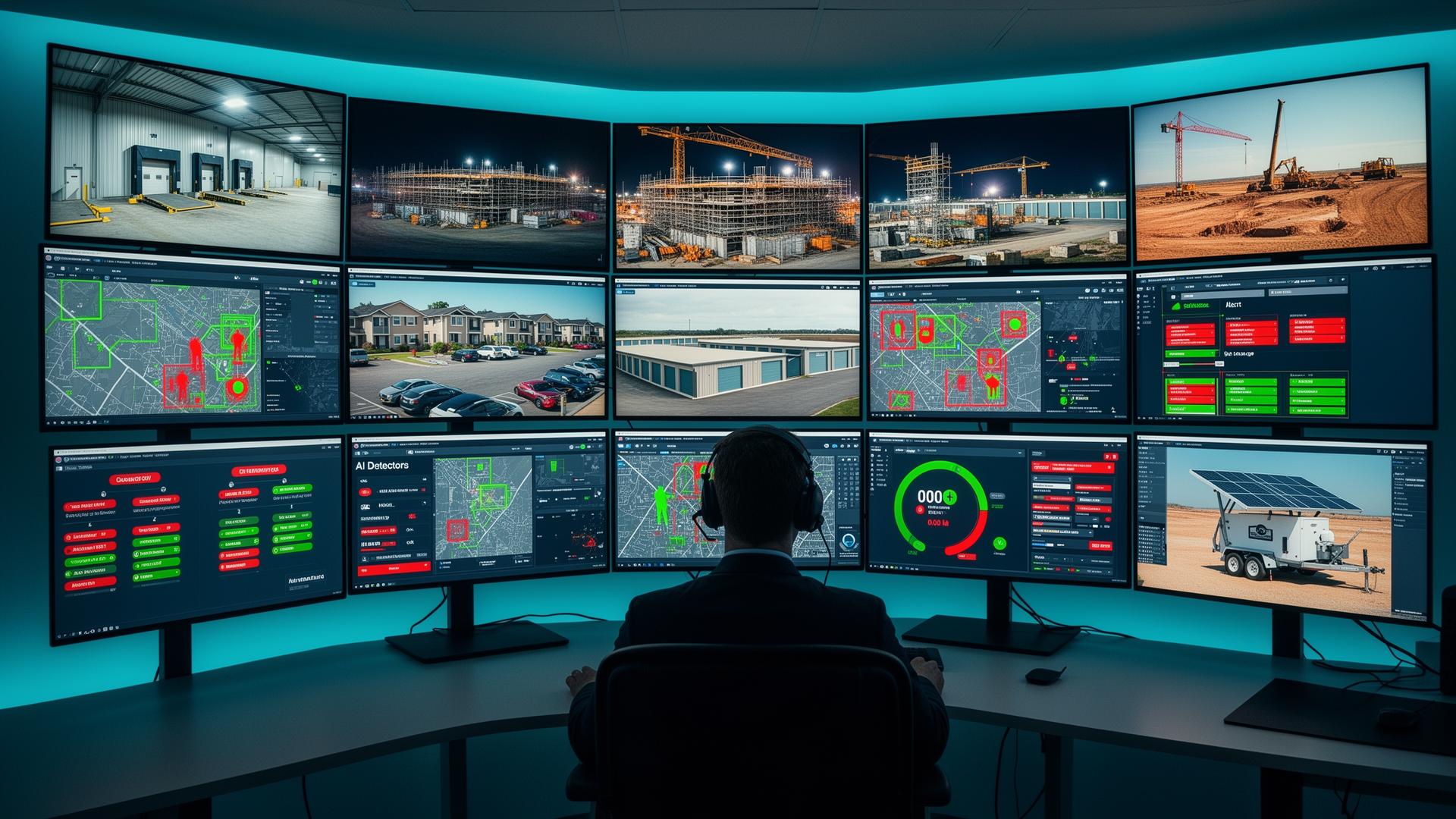
Commercial security camera systems are engineered — not just installed. Platforms from manufacturers such as Hanwha Vision and Axis Communications deliver the resolution, low-light performance, and durability that commercial facilities need. A properly designed camera system considers coverage at entrances, parking lots, docks, hallways, common areas, and sensitive interior spaces, along with the video management software (VMS) or cloud platform that will store and review footage. Modern AI-assisted cameras add capabilities like person and vehicle detection, loitering alerts, and intelligent video search that make review dramatically faster. For deployments that need real-time human oversight, our 24/7 live security camera monitoring service adds trained operators on top of the technology.
Access Control
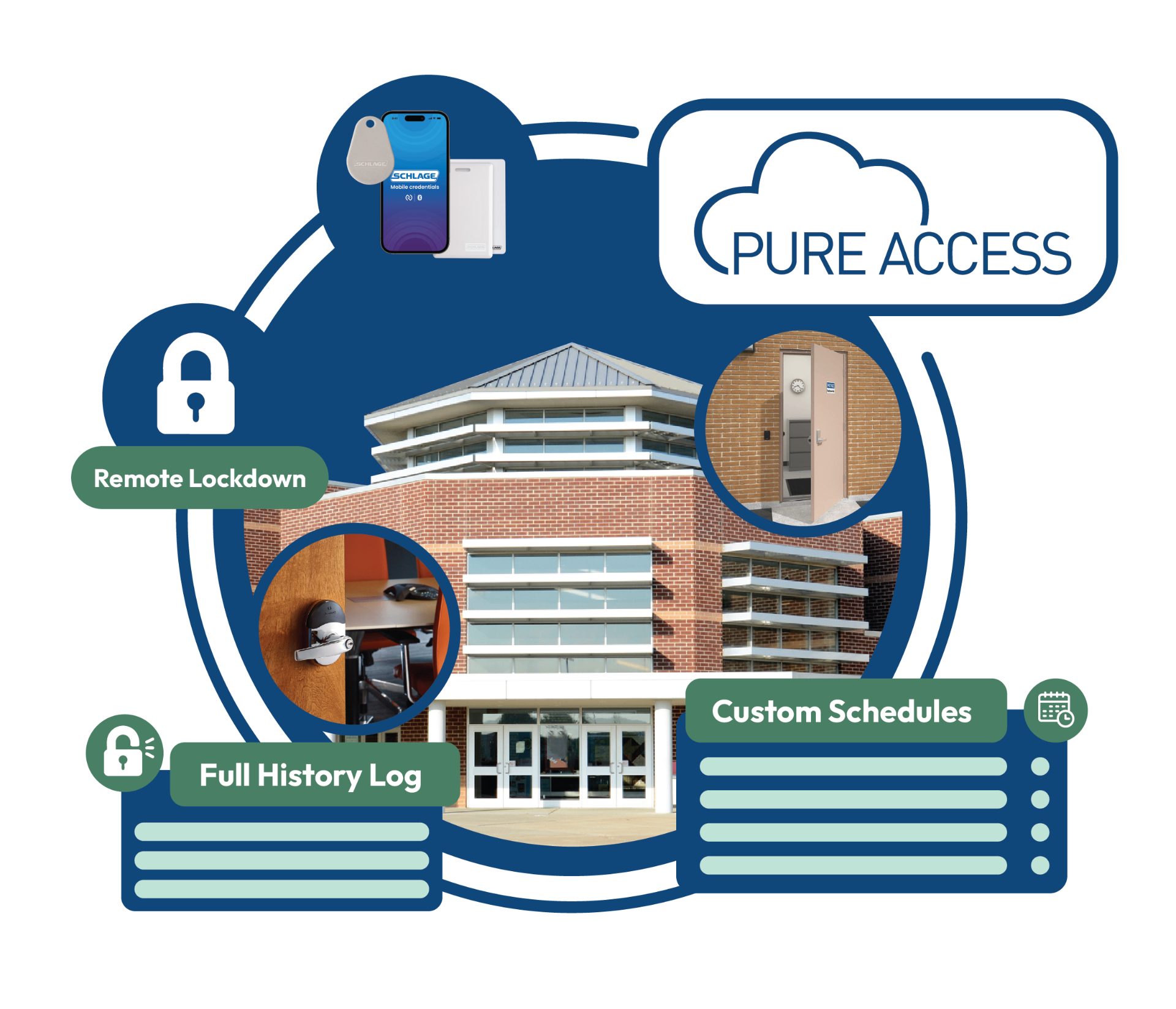
Commercial access control replaces brass keys with managed credentials — cards, fobs, and mobile credentials on staff smartphones. Ecosystems from Schlage and Allegion, paired with cloud platforms such as Pure Access Cloud, allow property managers and facility directors to issue and revoke credentials from a browser, schedule doors to lock and unlock automatically, remotely unlock openings for deliveries, and pull complete audit trails of every door event. For a deeper look at how cloud-managed access works in multifamily and commercial settings, see our article on Schlage and Pure Access Cloud.
Structured Cabling
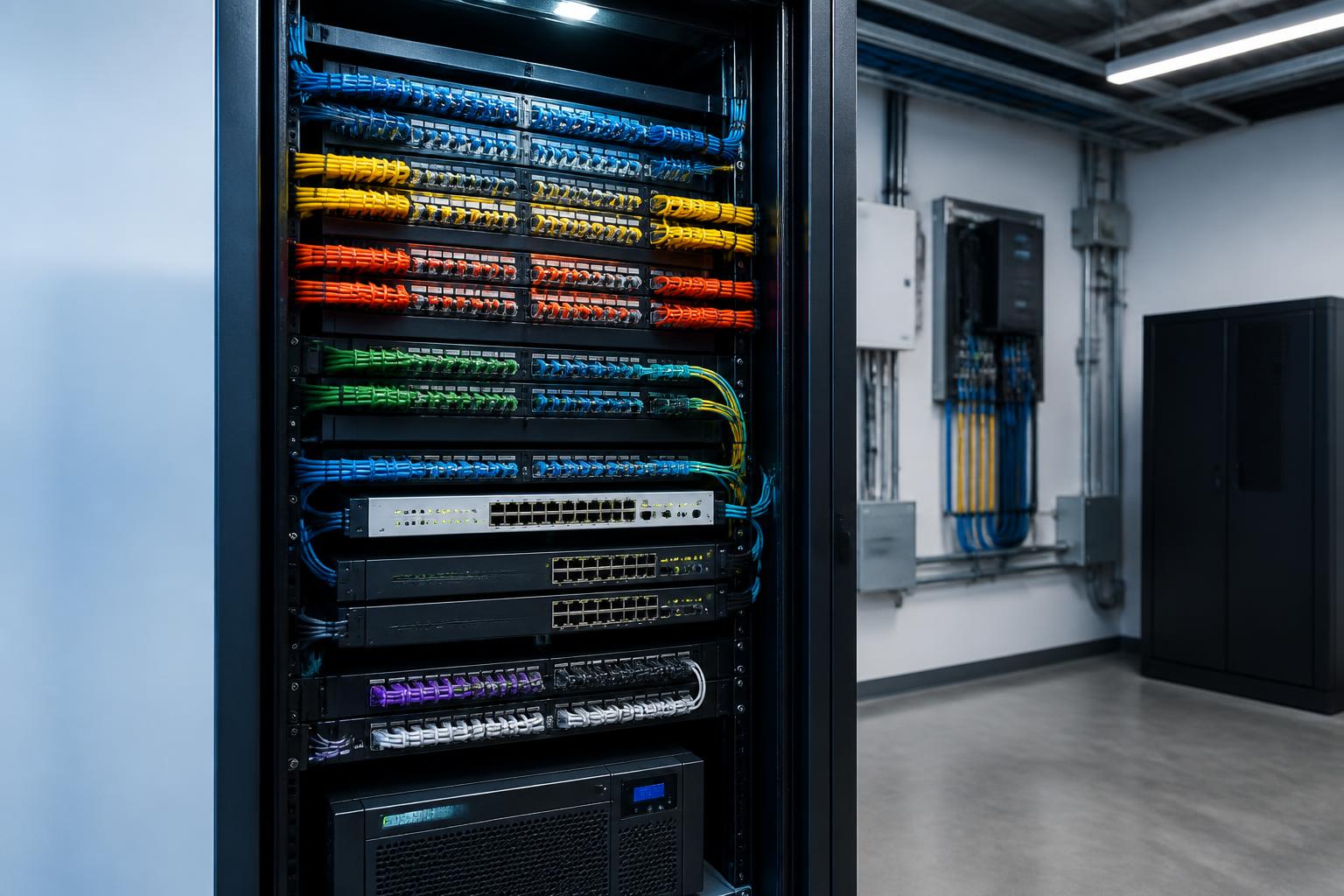
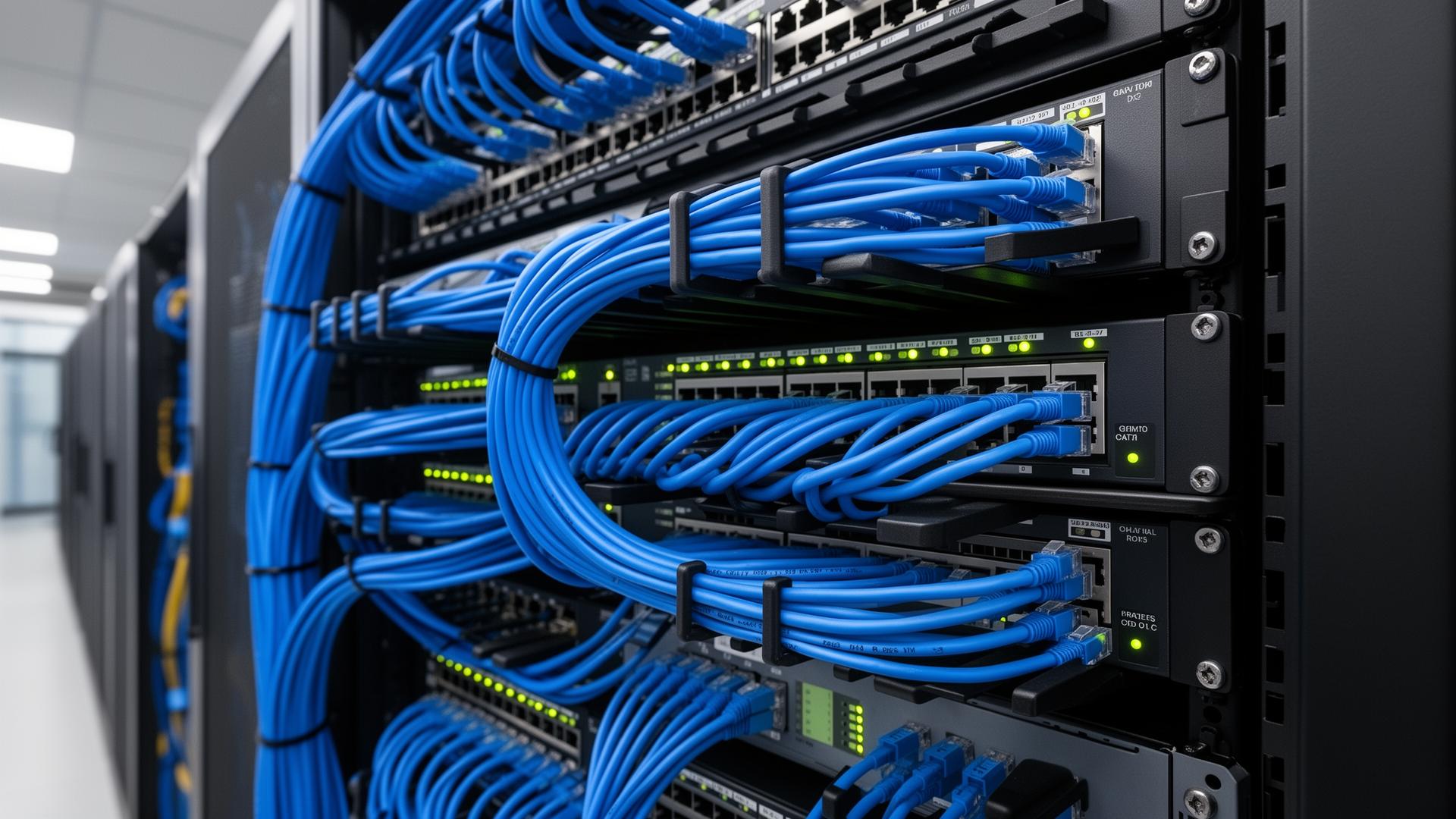
Structured cabling is the foundation everything else runs on. A well-designed commercial network cabling system uses the right category of cable for the application — typically Cat6 for standard office and camera drops and Cat6A where higher bandwidth, longer distances, or shielding are needed. Just as important as the cable itself are the details: neat cable pathways, professional terminations, labeled patch panels, tested drops, documented as-builts, and enough capacity built in for future growth. For a closer look at what separates a good install from a rushed one, see our guide on network cabling best practices in Minnesota.
Fiber Optic Infrastructure
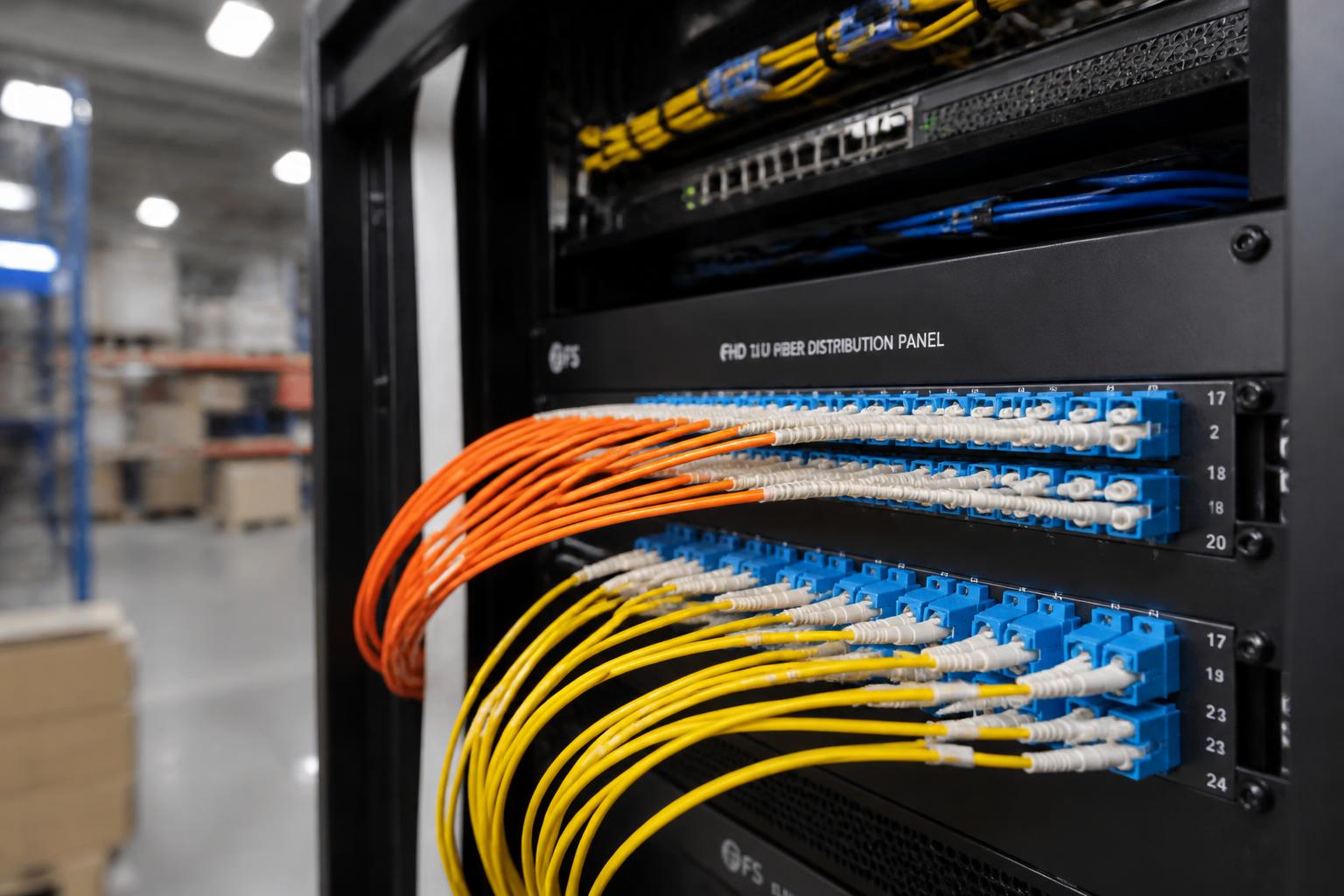
Fiber is what ties larger commercial buildings and multi-building sites together. A typical design uses multimode fiber for backbone runs between the MDF (Main Distribution Frame) and each IDF (Intermediate Distribution Frame), and single-mode fiber for longer distances between buildings on a campus. Fiber carries far more bandwidth than copper, isn't affected by electrical interference, and is the right choice for uplinks, camera backhaul, and any connection over 100 meters. Our guide to fiber infrastructure for commercial buildings covers the design decisions in more detail.
Commercial Wi-Fi
Business Wi-Fi is not just a stronger version of home Wi-Fi. Commercial wireless platforms from Ubiquiti UniFi, Aruba Instant On, and Cisco Meraki are engineered for density, coverage, VLAN segmentation, guest network isolation, and centralized cloud management across multiple sites. A proper design starts with a coverage plan — where users, devices, and IoT equipment will actually be — and results in access points placed for both signal strength and roaming performance. If you've ever wondered whether your wireless network is quietly costing you productivity, our article on why your business Wi-Fi might be holding your company back is a good starting point.
Managed Network Services
Installing the equipment is only part of the job. Managed network services provide the ongoing support that keeps a commercial network healthy — proactive remote monitoring, firmware updates, configuration backups, cloud dashboards, VPN management, security reviews, and clear escalation when something goes wrong. Instead of finding out about a problem when users start calling, managed services surface issues early and resolve most of them before they become disruptions. Our article on why reliable network infrastructure matters covers what a proactive support model actually looks like.
Why Businesses Are Moving Toward Integrated Technology
A generation ago, it was normal to hire one company for cabling, another for cameras, another for access control, another for Wi-Fi, and yet another for ongoing IT support. That model still exists — but more businesses are moving away from it, for good reason. When five different vendors touch the same building, no one owns the outcome. Cables get pulled without a plan, cameras end up on the wrong VLAN, access control conflicts with the door hardware, and troubleshooting becomes a game of finger-pointing.
Consolidating these systems under one commercial low voltage contractor changes the equation. The benefits show up quickly:
- Better planning — one team designs cabling, network, cameras, and access control as a single system, sized correctly from day one.
- Faster troubleshooting — when something is wrong, there is one number to call and one team that understands the entire environment.
- Cleaner installations — pathways, racks, IDF closets, and outdoor penetrations are coordinated instead of stacked on top of each other.
- Simpler expansion — adding a camera, a door, an access point, or a new building is straightforward when the original design left room for growth.
- Long-term consistency — labeling, documentation, credentials, and support processes stay uniform across every site.
Industries We Commonly Serve
Commercial low voltage systems show up in nearly every kind of business, but a few industries invest in them consistently:
- 🏭 Manufacturing
- 📦 Warehouses & Distribution
- 🏢 Office Buildings
- 🏘 Apartment Communities
- 🛍 Retail
- 🦷 Dental Offices
- 🏥 Medical Facilities
- 🏫 Schools & Education
- ⛪ Churches & Places of Worship
- 🏛 Municipal & Government Buildings
Each of these environments has its own priorities — warehouses care about perimeter coverage and dock activity, dental and medical offices care about HIPAA-adjacent segmentation and cabling in clinical spaces, apartment communities need scalable mobile credentials, and schools need layered security tied to emergency procedures. A commercial low voltage contractor's job is to design each system around the way the building actually operates.
Technology Is More Connected Than Ever
Ten years ago, security cameras, access control, phone systems, and computer networks were largely separate. Today, they are all pieces of the same connected environment:
- Security cameras live on the network and stream to a VMS or cloud platform.
- Access control controllers, readers, and cloud dashboards depend on reliable networking.
- Cloud software — from ERP to point-of-sale to booking systems — requires consistent Wi-Fi and internet.
- AI analytics on cameras require sufficient bandwidth and switch capacity to run without dropping frames.
- Mobile credentials on smartphones only work when the cloud platform is reachable.
Because every system shares the same infrastructure, the infrastructure itself has to be planned as a complete ecosystem — not as a series of individual projects layered on top of each other over time. That planning is exactly what a commercial low voltage contractor exists to do.
One Partner. One Technology Strategy.
The clearest way to see the difference is to compare how projects typically get delivered.
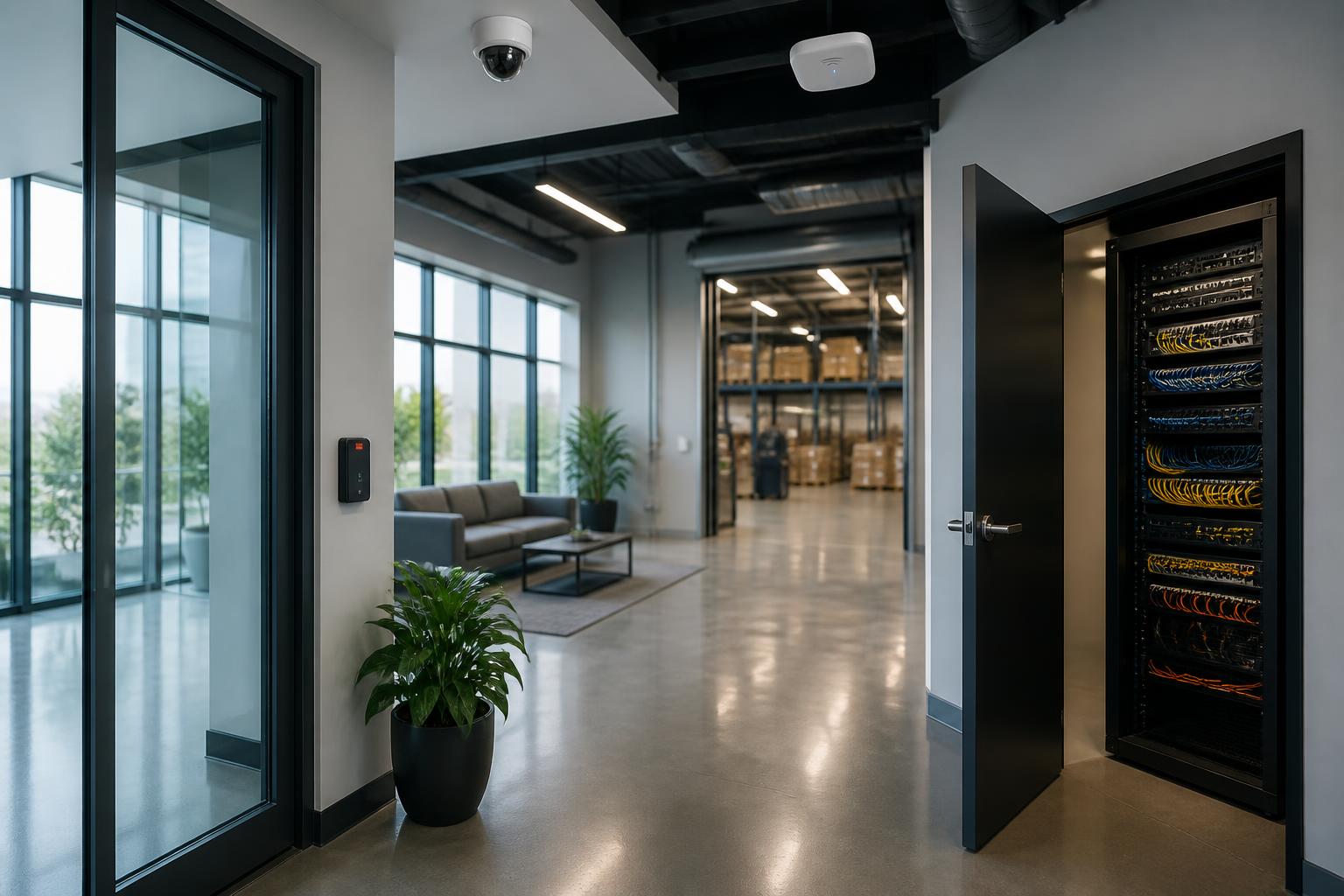
In the traditional approach, the business owner is the integrator by default — they are the one keeping five vendors aligned. In the integrated approach, that responsibility shifts to a single commercial low voltage contractor who plans the environment end-to-end and stays involved as the business grows.
Serving Minneapolis, St. Paul & East Central Minnesota
Magnuson Low Voltage Wiring provides commercial low-voltage solutions for businesses throughout Minneapolis, St. Paul, and East Central Minnesota — including offices, warehouses, manufacturers, schools, apartment communities, medical and dental facilities, retail businesses, churches, municipal buildings, and new commercial developments. Whether you're planning a ground-up build, upgrading aging infrastructure, or consolidating multiple vendors into one trusted technology partner, we can design and install the integrated systems your business will rely on for years to come.