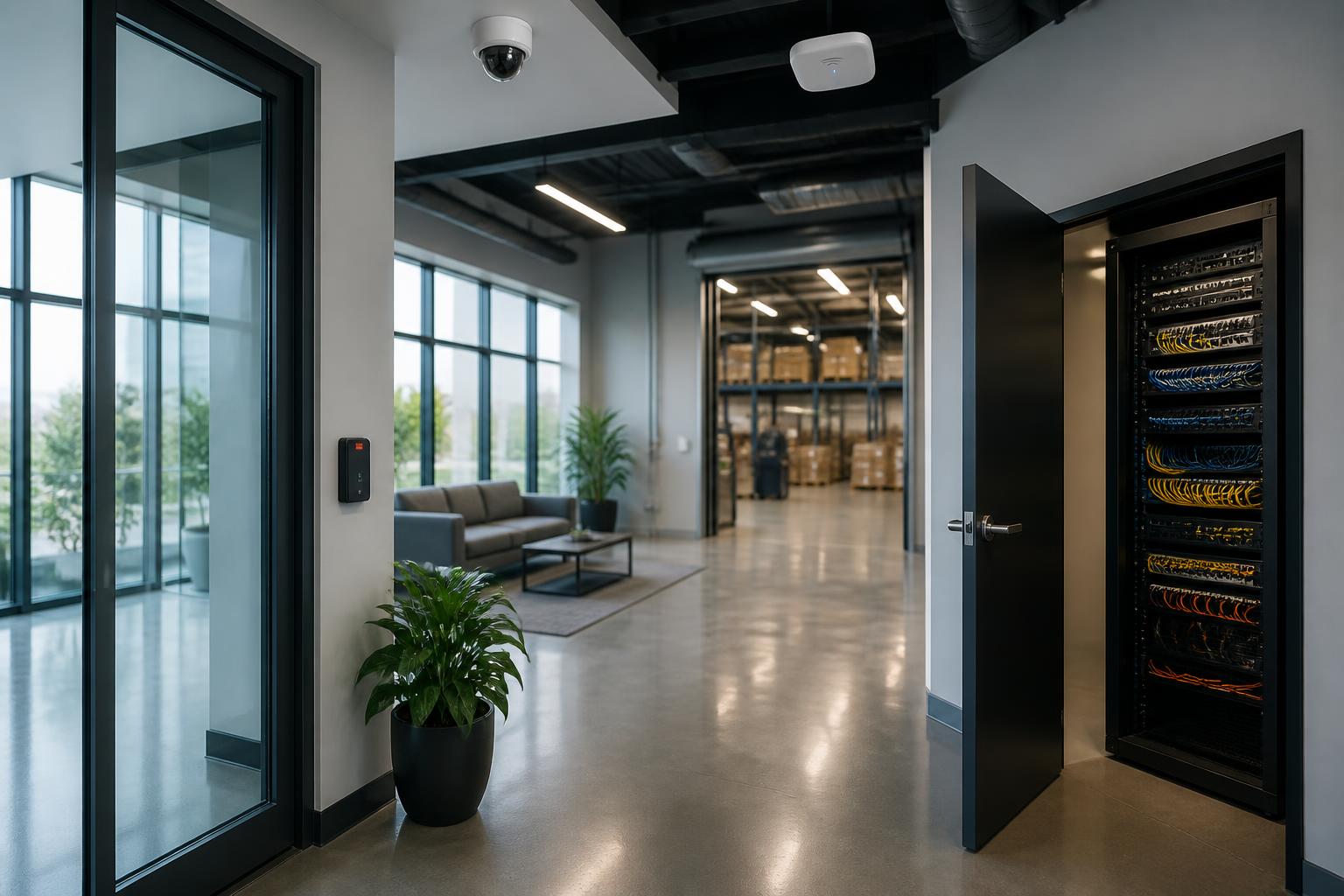
It's one of the most common questions we get from Minnesota business owners, property managers, and general contractors: "Do I call an electrician or a low voltage contractor for this?" The answer matters more than most people realize. Security cameras, access control, network cabling, fiber, intercoms, alarms, and Wi-Fi are governed by a completely different license, code section, and skill set than the 120/208/480V power that runs lights, receptacles, and HVAC in your building.
This guide breaks down the difference in plain language for owners across Minneapolis, St. Paul, Bloomington, Edina, Plymouth, Maple Grove, Woodbury, Eagan, Eden Prairie, and communities throughout East Central Minnesota & Western Wisconsin — with a straight read on Minnesota licensing, when you need both trades on a job, and how to avoid the "handyman-grade" installs that quietly cost businesses tens of thousands of dollars a year.
The Short Answer
- Electrician (Class A / Master / Journeyworker): Line-voltage power — 120V, 208V, 240V, 277V, 480V. Panels, feeders, branch circuits, receptacles, lighting, motors, EV chargers, transformers. Anything downstream of the utility meter that could seriously hurt you.
- Low voltage contractor (Technology Systems Contractor with a Power Limited Technician): Everything under ~100V that carries data, video, voice, or signal — security cameras, access control, network cabling, fiber, Wi-Fi, VoIP, intercoms, burglar alarms, nurse call, and paging.
- Both: On new construction, tenant improvements, and most serious commercial renovations, you almost always need both trades — the electrician for power to the IT closet, camera locations, and door hardware; the low voltage contractor for everything that moves data or signal.
What an Electrician Actually Handles
A licensed Minnesota electrician's world is line-voltage electrical work under Minnesota Statute Chapter 326B and the National Electrical Code (NEC). That includes:
- Service entrances, meter mains, and main distribution panels
- Sub-panels, feeders, and branch circuits at 120V and above
- Receptacles, switches, and lighting
- Motors, HVAC power, and mechanical connections
- Transformers and step-down power supplies
- EV chargers, generators, transfer switches, and photovoltaic systems
- Grounding, bonding, and building electrical protection
- Pulling permits with the local AHJ for line-voltage work and coordinating state electrical inspection
An electrician is trained to keep line voltage from starting a fire, energizing a metal enclosure, or killing someone. That's a serious, specialized job — and it's not the same job as terminating a Cat6A cable or programming an access control panel.
What a Low Voltage Contractor Handles
A licensed Minnesota low voltage contractor — technically a Technology Systems Contractor (TSC) with a responsible licensed Power Limited Technician (PLT) — handles the systems in your building that carry data, video, voice, and signal at low voltage (generally under 100V, most systems are actually 12–48V DC):
- Commercial security cameras — IP, PoE, fiber uplinks, NVR/VMS design, storage sizing
- Access control — readers, controllers, electrified door hardware, mag locks, fire alarm interface, cloud/on-prem software
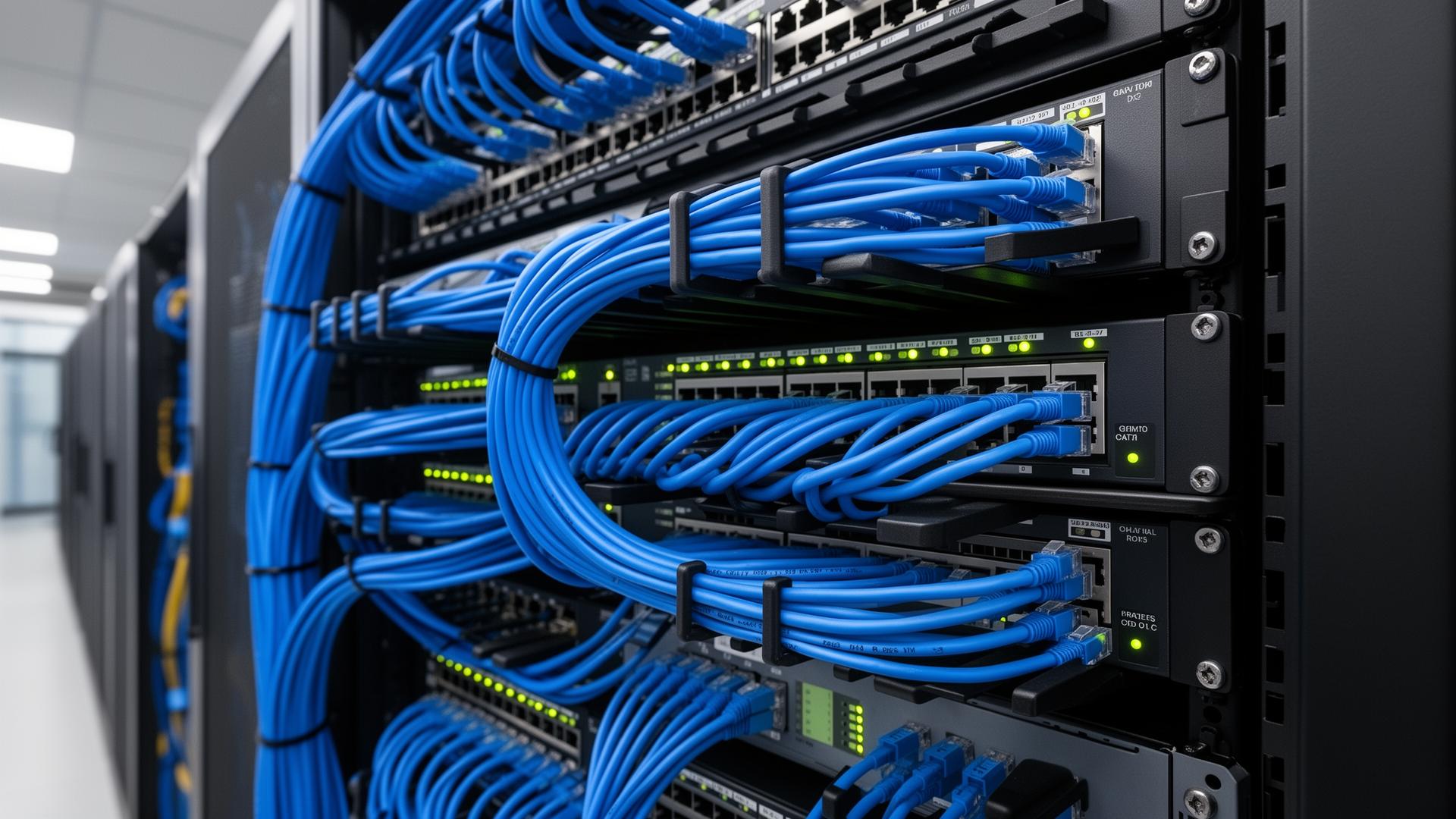
- Structured cabling — Cat6, Cat6A, patch panels, racks, cable pathways, labeling, testing, and certification
- Fiber optic infrastructure — building backbones, inter-building runs, fusion splicing, OTDR certification
- Business Wi-Fi — site surveys, access point placement, controller design, guest and IoT VLANs
- VoIP phone systems, paging, and intercoms
- Burglar alarms, panic buttons, glass break, and monitored intrusion systems
- Nurse call, healthcare communication, and mass-notification systems
- Coordination with the fire alarm contractor on interfaces (mag locks, elevator recall, etc.)
These systems live in a different code section, use different wire types (plenum-rated, shielded, fiber), require different testing (Fluke certification, OTDR reports, camera field-of-view walkthroughs, access-control door schedules), and demand a different kind of documentation than a lighting circuit.
Why This Isn't "Just Small Wire"
Every experienced commercial IT director in Minnesota has a story that starts with, "The electrician said he could pull the network cable while he was there…" and ends with a $40,000 recable a year later. Here's why cameras, access control, cabling, fiber, and Wi-Fi are genuinely different work:
- Signal integrity is fragile. Cat6A run next to a fluorescent ballast, kinked over a beam, or stapled tight will pass a continuity test and still fail at 10 Gbps under load. It looks fine until the network is slow for a year and nobody can figure out why.
- Terminations are a craft. Punch-down technique, twist maintenance, and connector choice determine whether a jack holds up for 20 years or fails after a hot summer.
- Fiber is not "just glass". A dirty ferrule or a bad fusion splice adds insertion loss that quietly caps your throughput. OTDR certification isn't optional on a real commercial job.
- Cameras are engineered, not "hung". Lens choice, mounting height, field of view, IR reach, storage retention, and PoE budget all have to be designed before the first hole is drilled.
- Access control is a life-safety system. A mag lock without a proper fire alarm interface or a delayed-egress door installed wrong can get people killed and get the building owner sued. NFPA 101 and NFPA 72 govern how these doors behave in an emergency.
- Wi-Fi is a design problem. Access points aren't "put one every 40 feet." A proper site survey with a spectrum analyzer determines placement, channel plan, and antenna choice.
- Software matters. Camera VMS, access-control platforms, and network switches all need to be commissioned, licensed, patched, and integrated — not just powered on.
Why Businesses Should Avoid "Handyman-Grade" Installs
The reason we keep replacing systems 3 years in almost always comes back to the same handful of shortcuts:
- Unshielded stranded patch cable used for a full 250-foot run in a warehouse ceiling
- Zip ties cranked tight over Cat6, deforming the pairs
- Camera cable stapled to the outside of a metal stud, next to a lighting circuit
- Mag lock installed with no request-to-exit, no delayed egress, and no fire alarm interface
- Access control panel plugged into a random receptacle instead of a UPS-backed dedicated circuit
- NVR "installed" on a shelf in a supply closet with no ventilation and no surge protection
- No labeling, no test reports, no as-built drawings — nothing the next contractor can pick up
The install works on day one. It fails silently for years. When it finally breaks, the business is on the hook for the full rip-and-replace, plus whatever the outage cost. This is the whole thesis of our post on the hidden cost of outdated commercial technology.
Minnesota Licensing: What the DLI Actually Says
Minnesota is one of the strictest states in the country about who can install low-voltage systems. The Minnesota Department of Labor and Industry (DLI) regulates this work under Chapter 326B — the same chapter that regulates electricians. Two license categories are directly relevant:
Power Limited Technician (PLT)
A PLT is a state-licensed technician qualified to install power-limited (Class 2) circuits — the wiring behind cameras, access control, structured cabling, fiber, VoIP, intercoms, alarms, and low-voltage sound and paging systems. Becoming a PLT requires documented on-the-job hours and passing a state exam. A licensed PLT is required to be on the job or supervising the work in most commercial low-voltage installs in Minnesota.
Technology Systems Contractor (TSC)
A TSC is the contractor-level license a business must hold to legally offer low-voltage installation services in Minnesota. Every TSC must have a qualifying licensed Power Limited Technician (or Master Electrician) on staff, carry the required bonding and insurance, and pull permits with the state or local AHJ on qualifying jobs.
In plain English: hiring a general contractor's "guy who's good with cables" — or an unlicensed handyman — for a commercial camera or access control install is not compliant with Minnesota law, regardless of how the invoice is written. When something fails, when there's an insurance claim, when the fire marshal shows up, or when the building sells, that installation becomes the owner's problem.
What Every Minnesota Business Owner Should Verify
- The company holds an active Technology Systems Contractor license (or the equivalent Electrical Contractor license if they self-perform low voltage).
- A responsible licensed Power Limited Technician is on the job or supervising the crew.
- The company carries commercial general liability, workers' comp, and the bonding required by DLI.
- Permits are pulled with the state electrical inspector or local AHJ where required.
- Final testing, labeling, and as-built documentation are delivered at closeout.
For a full checklist of what to demand before signing a proposal, see our commercial security systems buyer's guide and our commercial building technology planning guide.
When You Need Both an Electrician and a Low Voltage Contractor
On real commercial projects across Minnesota, these two trades work side by side — not in competition. A well-run job usually looks like this:
- Electrician: Runs a dedicated 20A circuit and UPS-friendly receptacles to the IT/network closet, camera locations, door hardware power, gate operators, and any card-reader locations that need line power nearby.
- Low voltage contractor: Designs and installs the actual camera, access control, cabling, fiber, Wi-Fi, VoIP, and alarm systems on top of that power infrastructure — then commissions the software.
- Coordination points: Fire alarm interface with mag-locked doors, elevator recall, generator loads for critical IT gear, EV charger data connectivity, and site lighting relationships with camera performance.
When we walk a new commercial job in Minneapolis, St. Paul, Blaine, Forest Lake, or Cambridge, one of the first things we do is coordinate directly with the electrician of record so the circuits, conduits, and pathways are ready for the low-voltage systems that will land on top of them. That coordination is a big part of what separates a smooth commissioning day from a change-order disaster.
Common Real-World Scenarios
- New office buildout in Eden Prairie: Electrician handles lighting, power, and mechanical. Low voltage contractor handles data cabling, Wi-Fi, cameras, access control, and VoIP.
- Warehouse camera upgrade in Eagan: Low voltage contractor pulls PoE camera cable, mounts cameras, terminates fiber uplinks to the office. Electrician may add a dedicated NVR circuit and UPS receptacle.
- Retail storefront in Woodbury adding mag locks and cameras: Low voltage contractor. Electrician gets involved only if additional 120V is required near the door.
- Manufacturing plant in Brainerd adding a new production line: Electrician handles motor power and controls. Low voltage contractor handles machine networking, industrial Wi-Fi, cameras, and access control.
- School addition in Duluth: Both trades, fully coordinated with the fire alarm contractor for lockdown, mass-notification, and elevator recall.
10 Questions to Ask Before You Hire
Are you a licensed Minnesota Technology Systems Contractor?
If the answer is "we work under so-and-so's license," pass. You need it in the company's name.
Who is the responsible licensed Power Limited Technician on my job?
By name. That person should be on site or actively supervising, not just on paper.
Will you pull the required permits with the state or local AHJ?
Commercial cameras, access control, and structured cabling frequently require permits. Owners are on the hook when they don't get pulled.
How do you coordinate with the electrician of record?
Answers like "we don't, we just show up when they're done" are a red flag on any real commercial job.
What testing and certification do I get at closeout?
Fluke channel test reports for copper, OTDR reports for fiber, and a camera field-of-view walkthrough should be non-negotiable.
What does the as-built documentation look like?
Rack elevations, port maps, door schedules, wiring diagrams, and admin credentials handed to the owner.
How is the fire alarm interface designed on my locked doors?
If they don't understand the question, they should not be installing mag locks in Minnesota.
Do you self-perform, or is this being subbed to a handyman?
Owners have the right to know who is actually in their building.
What's the warranty on labor, and how do service calls work?
Two years on labor is a reasonable commercial baseline. Response-time SLAs matter for multi-site operators.
Will you train my team and hand over admin ownership?
You should own your camera VMS, access control, and network — not be held hostage by the installer.
How Magnuson Low Voltage Wiring Fits In
Magnuson Low Voltage Wiring is a licensed Minnesota Technology Systems Contractor with responsible licensed Power Limited Technicians on staff. We design and install commercial security cameras, access control, network cabling and fiber, business Wi-Fi, VoIP, intercoms, and burglar alarms across the Twin Cities and East Central Minnesota — and we coordinate directly with your electrician, general contractor, and IT team on every job.
If you're planning a commercial buildout, a security upgrade, or a full technology refresh in Minneapolis, St. Paul, Blaine, Forest Lake, Cambridge, North Branch, Rush City, or anywhere else in Minnesota or Western Wisconsin, schedule a walkthrough before the drywall closes. It's the cheapest hour you'll spend on the project.