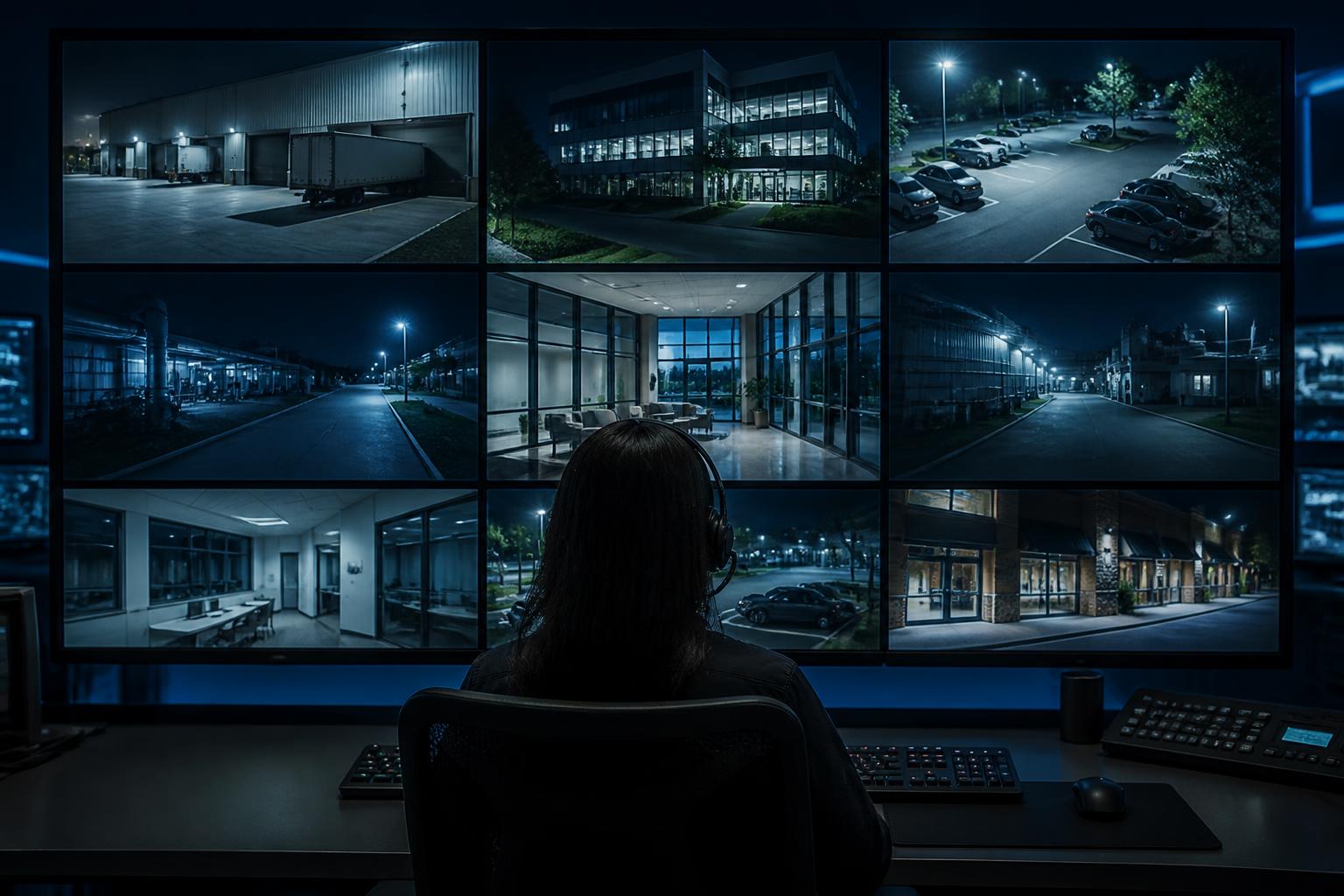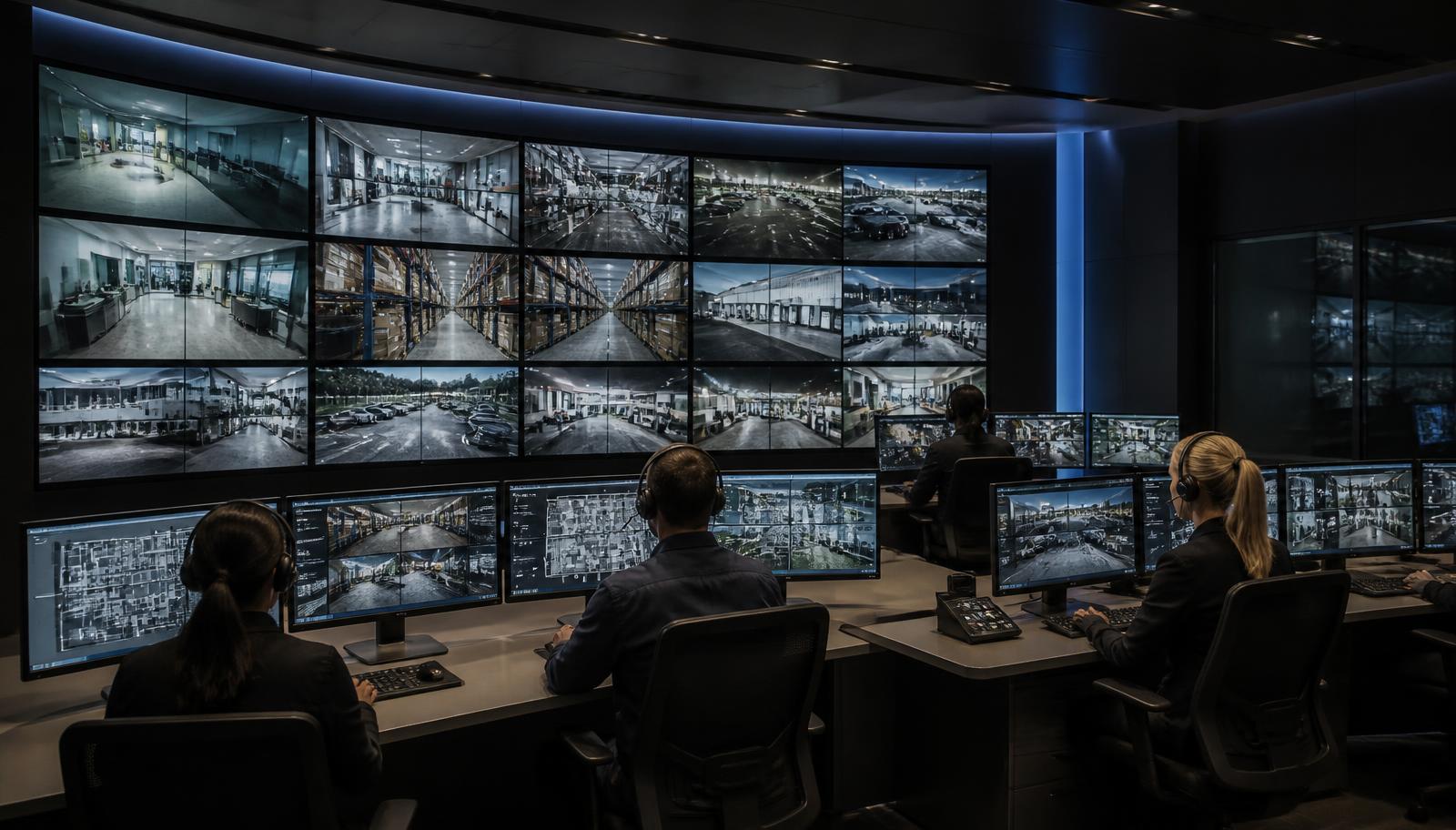
If you are looking for 24/7 live video monitoring, the first thing to know is that recording is not monitoring. Most commercial camera systems only write video to a recorder. Nobody is watching, nothing is verified, and no one intervenes — so the footage becomes useful only after the loss has already happened.
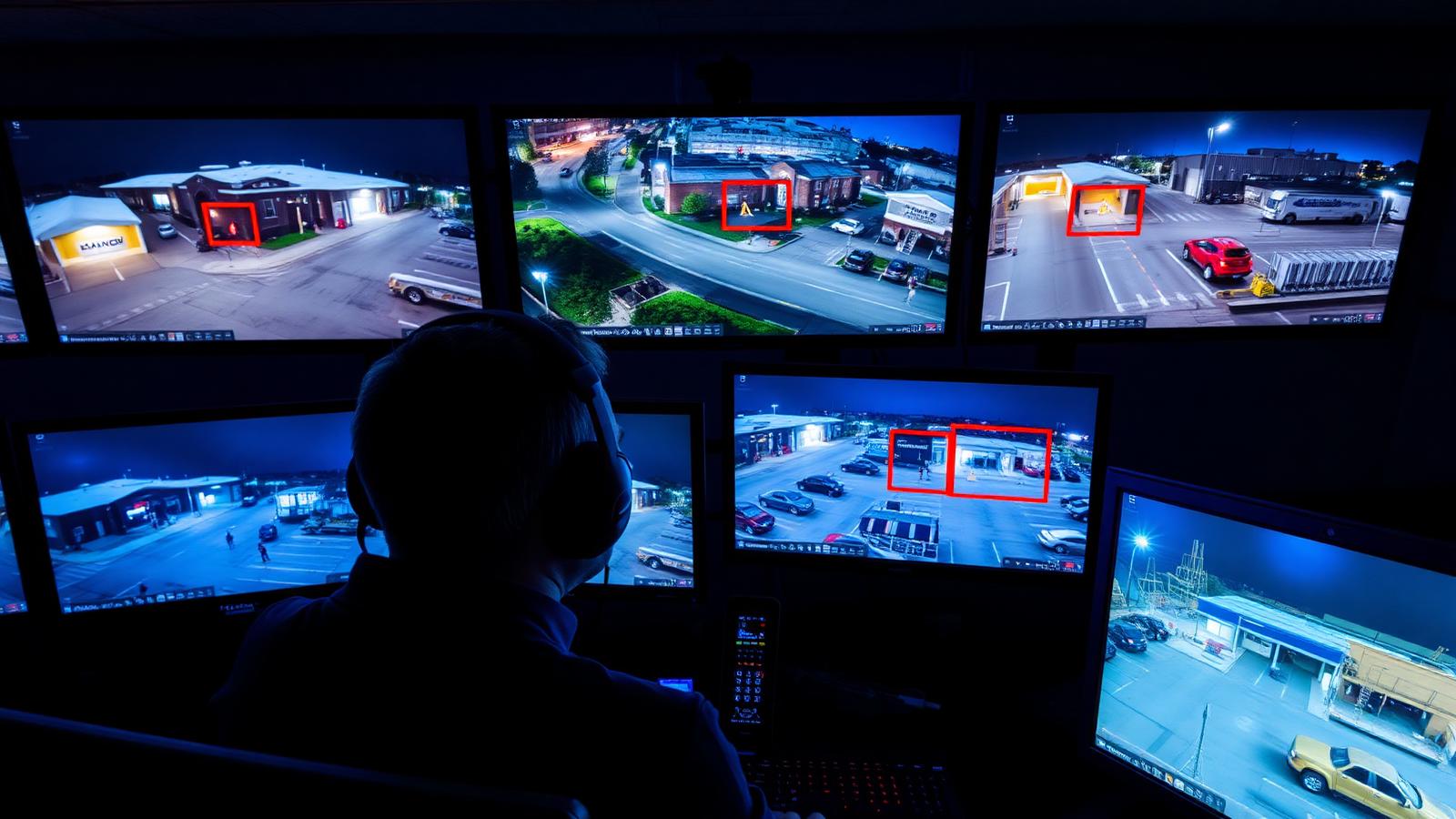
Live video monitoring is the proactive security alternative: AI analytics detect a person or vehicle in a protected area, a trained operator views the live feed within seconds, speaks to the intruder through on-site speakers, and escalates to police as an eyewitness to a crime in progress. That is real-time response, not after-the-fact review.
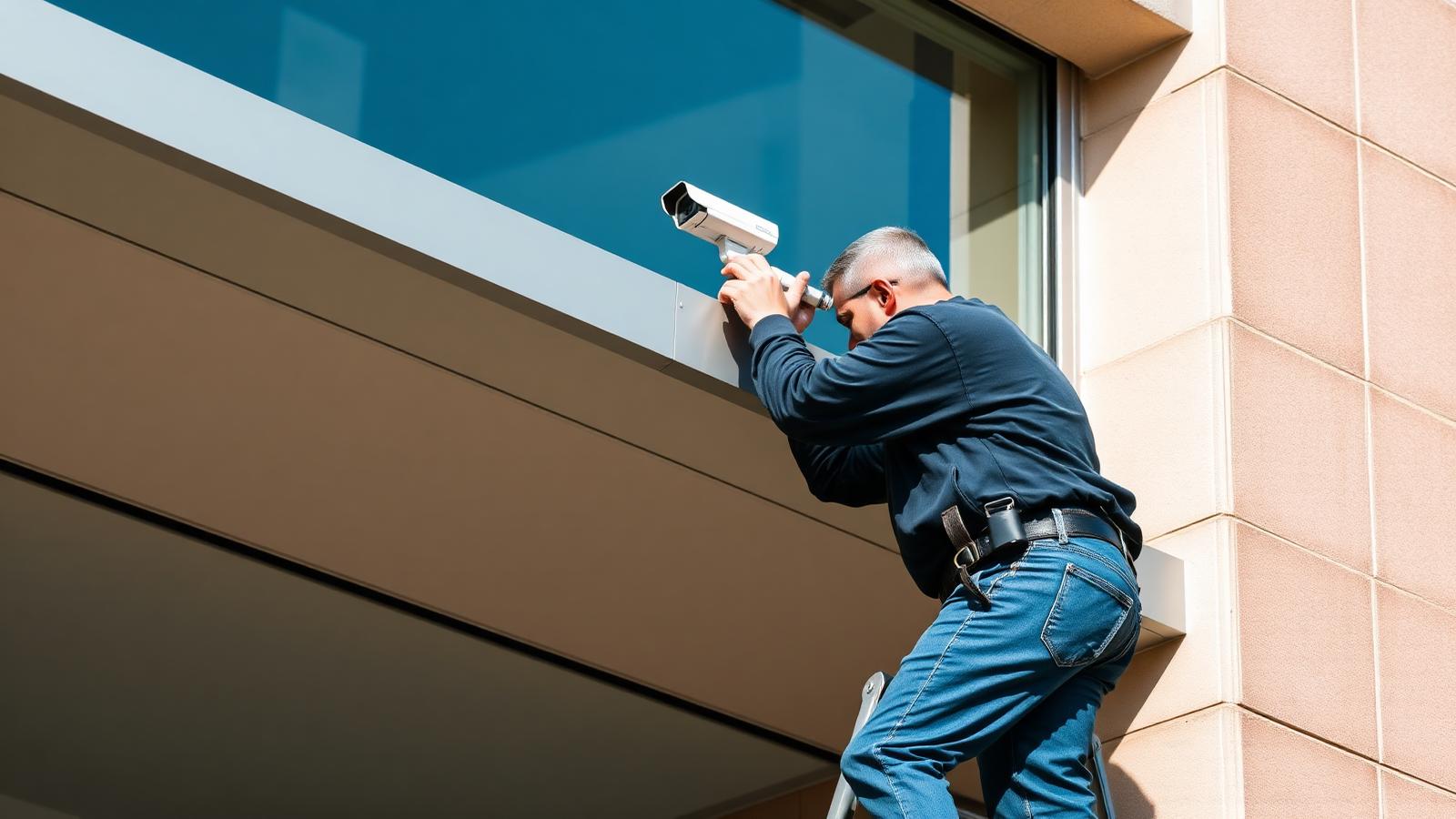
Cameras still matter. Professionally installed commercial security cameras are the foundation, and in many cases existing cameras can be connected to a monitoring service. This guide explains how monitored camera systems actually work, when proactive monitoring is worth it, and what your property needs to support it — for businesses across Minnesota and Western Wisconsin. Full details are on our live video monitoring service page.
Recording vs. Live Video Monitoring: What's the Difference?
Both approaches have real value — they just serve different purposes. A well-designed commercial security program usually includes both.
Traditional Commercial Security Cameras
- Record continuous or motion-based video
- Store footage locally (NVR) or in the cloud
- Provide evidence after an incident
- Help investigations, insurance claims, and HR events
- Are fundamentally reactive — they document what already happened
Live Video Monitoring (Remote Video Monitoring)
- Watches for verified events in real time using AI video analytics
- Routes suspicious activity to trained monitoring operators in a security operations center
- Allows human intervention while an incident is unfolding
- Helps prevent theft, vandalism, and trespassing before damage is done
- Is fundamentally proactive — the goal is to stop the event, not just record it
Recorded footage is essential. Live monitoring builds on that foundation by adding real-time awareness and response.
What Happens When an Alarm Is Triggered?
Here's the real-world workflow behind a professional monitored security camera system:
- Movement or event detected at a camera on the property.
- AI analytics classify the event — is it a person, a vehicle, an animal, headlights, or environmental noise like blowing trees or snow?
- The monitoring center receives the alert only when the event meets the site's rules (for example: a person inside the fence line after hours).
- A trained operator reviews the live video feed within seconds.
- False alarm? The event is closed — no dispatch, no wasted response.
- Actual trespasser or suspicious activity? The operator issues a live audio warning through on-site speakers, letting the subject know they are being watched in real time.
- If necessary, the operator notifies your property contacts and dispatches local law enforcement with verified video — which typically results in a higher-priority response.
The goal isn't simply to call the police. The goal is to verify events first, deter the incident in progress, and only escalate when there's a real threat. That's what separates modern remote video monitoring from a traditional alarm signal.
Where Live Video Monitoring Makes the Biggest Difference
Any commercial property benefits from professionally installed cameras, but certain environments benefit dramatically more from proactive monitoring than from recorded footage alone:
- Construction sites — copper, tools, equipment, and fuel theft after hours.
- Equipment yards & contractor yards — high-value assets sitting in open outdoor spaces.
- Warehouses & distribution centers — loading docks, trailer yards, and perimeter fences.
- Manufacturing facilities — shift-change windows and weekend shutdowns.
- Commercial office buildings — after-hours lobby access, parking ramps, and rooftops.
- Apartment communities — parking areas, mail rooms, package rooms, and common areas.
- Schools — athletic fields, portables, and building perimeters during breaks.
- Churches — mid-week vacancies, catalytic converter theft in lots, exterior HVAC.
- Retail centers — back-of-house doors, dumpster corrals, and after-hours storefronts.
- Utility & critical infrastructure facilities — fenced compounds requiring verified perimeter alerts.
In each of these environments, waiting until Monday morning to review footage means the damage — theft, vandalism, or worse — has already been done. Live monitoring changes the timeline.
AI Is Powerful — But People Still Matter
Modern AI video analytics can reliably detect:
- People vs. animals vs. vehicles
- Loitering behavior in a defined zone
- Tripwire crossings and directional movement
- Perimeter breaches and restricted-area entry
- Vehicles stopped or entering after hours
But AI should enhance commercial surveillance — not replace human judgment. A skilled monitoring operator interprets context: is that a delivery driver checking an address, an employee who forgot a laptop, or someone probing the building? Experienced operators verify the event, reduce false alarms, and make informed decisions before escalating. That combination — AI analytics plus a trained human in a security operations center — is what makes monitored security cameras far more effective than either piece on its own.
Common Misconceptions About Monitored Security Cameras
"Someone is always watching my cameras."
Usually false. Unless you specifically pay for a monitoring service, no one is watching. Your NVR is recording — that's it.
"Security cameras prevent crime."
Not by themselves. Visible cameras deter some opportunistic crime, but they don't intervene. Determined trespassers know a camera can't call anyone or issue a warning on its own.
"Recording footage is enough."
Sometimes. Recorded footage is critical for investigations and insurance. But by the time footage is reviewed, the damage — copper theft, vandalism, break-in, catalytic converter loss — may already be done.
"Live monitoring means someone watches every camera all day."
That's not how modern remote video monitoring works. It's event-based. AI analytics filter the video around the clock and only push verified events to a live operator, so response is fast and false dispatches stay low.
Cameras Are Still the Foundation
Live video monitoring doesn't replace a great camera system — it multiplies its value. A professionally installed commercial camera system with correct lens selection, lighting, mounting heights, cabling, and coverage is what makes AI analytics and operator response effective in the first place. Poorly positioned or under-spec'd cameras will trigger constant false alarms and miss the events that actually matter. Get the foundation right first, then layer monitoring on top.
Traditional Security Cameras vs. Live Video Monitoring
| Capability | Traditional Cameras | Live Video Monitoring |
|---|---|---|
| Incident Detection | After the fact | Real time |
| Crime Deterrence | Passive presence | Active audio talk-down |
| Real-Time Response | No | Yes |
| Evidence Collection | Yes | Yes |
| False Alarm Reduction | Not applicable | AI + human verification |
| Audio Talk-Down | No | Yes, live from operator |
| Police Verification | Reviewed after event | Verified before dispatch |
| After-Hours Protection | Records only | Actively watched |
| Recurring Monitoring | None | 24/7/365 |
| Best Use Case | Investigation & evidence | Prevention & intervention |
Serving Businesses Across Minnesota
Magnuson Low Voltage Wiring provides commercial security camera installation, 24/7 live video monitoring solutions, access control systems, business network infrastructure, and fiber optic cabling throughout Minneapolis, St. Paul, and communities across East Central Minnesota and Western Wisconsin. Whether you need a fresh design or want to add live monitoring to cameras you already own, we can scope the right solution for your property.