Recorded video tells you what happened. Active video monitoring stops it from happening. For business owners and property managers in Minneapolis and St. Paul, MN, that difference is now the deciding factor between another break-in claim and a quiet night on the property. If you already know you want the service, our live video monitoring service page covers coverage hours and site requirements; this article explains why the proactive model works.
Across the Twin Cities, commercial buildings, construction sites, auto dealerships, self-storage facilities, apartment communities, and vacant properties are dealing with a level of after-hours trespassing, copper theft, catalytic converter theft, graffiti, and encampment-related damage that traditional record-only cameras were never designed to prevent. Active — sometimes called "live" or "proactive" — video monitoring is the response. It pairs AI video analytics on your existing cameras with a live, staffed dispatch center that can issue on-site voice warnings, verify events in real time, and get Minneapolis Police or St. Paul Police rolling on a confirmed, priority-one call.
Why Minneapolis and St. Paul Businesses Are Moving to Active Monitoring
The Twin Cities have seen well-documented growth in property crime and unsheltered homelessness over the last several years, and the two problems increasingly overlap on commercial property. Hennepin County's most recent point-in-time counts have reported roughly 3,000+ people experiencing homelessness on any given night, with Ramsey County counts routinely in the several hundreds, and both counties reporting sharp increases in unsheltered (outdoor) homelessness compared to pre-2020 baselines. The City of Minneapolis alone has cleared dozens of encampments per year, many of them repeatedly re-established on the same private commercial lots, alleyways behind Lake Street, industrial parcels in North Minneapolis, and vacant buildings along University Avenue in St. Paul.
For property owners, the operational impact is measurable:
- Repeated overnight trespassing and squatting in vacant tenant spaces
- Copper, wire, and catalytic converter theft from parking lots and back-of-house yards
- Broken windows, forced entry, and biohazard cleanup costs from encampments inside or against the building
- Graffiti and vandalism on exterior walls, dumpster enclosures, and rooftop HVAC units
- Fire risk from warming fires set next to buildings, dumpsters, and pallets
- Rising commercial property insurance premiums and, in some cases, non-renewal notices
Local reporting from the Star Tribune, MPR News, and KARE 11 has covered the pattern extensively — from the Uptown and Lake Street corridors in Minneapolis to Midway and the East Side in St. Paul. Business owners we talk to don't need convincing that the problem exists. They need a security model that responds in real time instead of handing them a hard drive full of evidence the morning after.
What "Active Video Monitoring" Actually Means
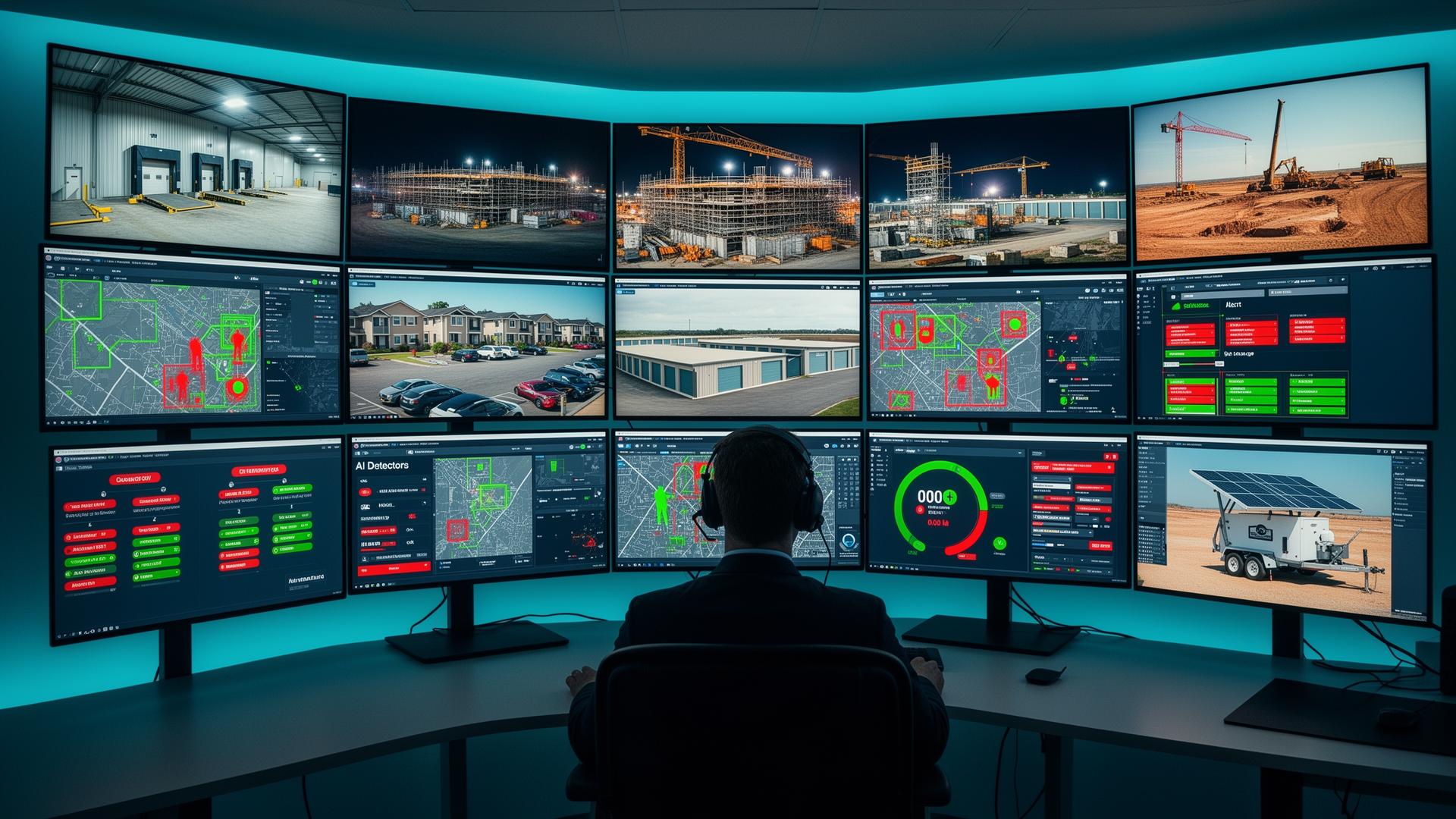
Active video monitoring — also marketed as remote video monitoring, live video monitoring, or virtual guard service — is a layered system with three moving parts working together:
1. AI Video Analytics on the Cameras
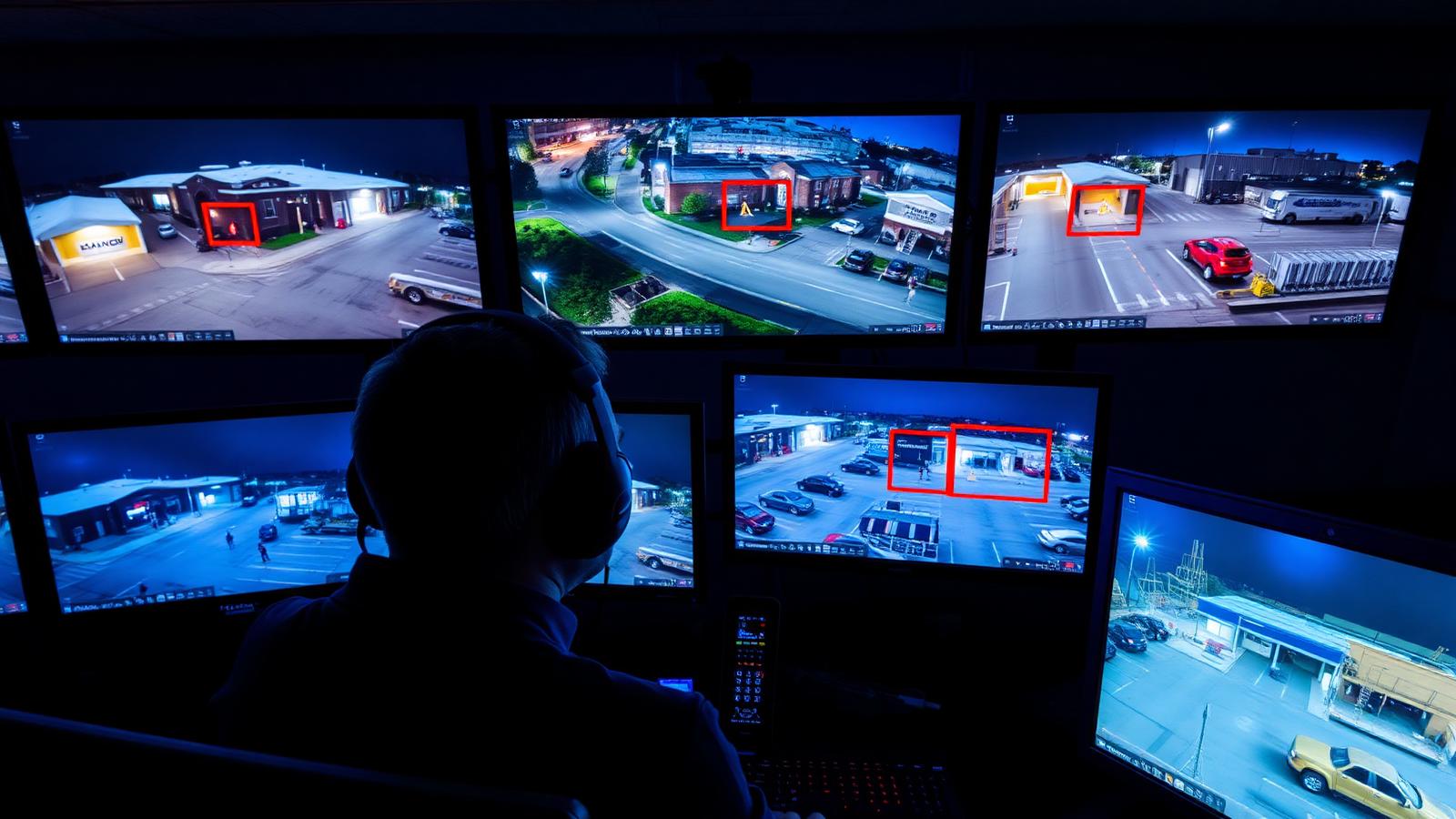
Modern IP cameras and video management systems run onboard or server-side AI analytics that classify what they see. Instead of alerting on every leaf blowing across the lot at 2 a.m., the system triggers only on defined objects and behaviors: person, vehicle, loitering, line crossing, tailgating, abandoned object, climbing, or crowd forming. Rules are tuned per camera — for example, a Minneapolis warehouse might arm "person in loading dock" from 7 p.m. to 6 a.m. and ignore vehicles in that same zone during business hours.
Well-tuned analytics typically reduce nuisance alerts by 95%+ versus legacy motion detection, which is what makes the next step — human review — economically feasible. See our overview of video surveillance and security camera systems for how we design these zones on a property-by-property basis.
2. A Live, Staffed Dispatch Center
When an AI event fires, it doesn't go to your phone and wait for you to notice. It routes to a UL-listed monitoring center staffed 24/7 by trained operators. The event pops on their screen with a short pre-event video clip, the live feed from that camera, the customer site profile, and a documented response plan. An operator visually verifies the event in seconds: is this an authorized after-hours employee, a delivery driver, a wandering pedestrian who took a wrong turn, or an actual trespasser cutting through a fence line?
Verified events get an action. Everything else gets logged and dismissed — no false police dispatch, no siren fatigue for your neighbors, no wasted patrol response that erodes your standing with MPD or SPPD.
3. Two-Way Audio Talk-Down (The Deterrent That Actually Works)
This is the piece most property owners underestimate. On-site speakers — either integrated into the cameras or mounted separately as horn speakers with strobes — let the monitoring operator speak live, by name, in real time to the person on your property. The scripts are direct and personalized:
"You in the gray hoodie by the blue Silverado — this is live security monitoring. You are trespassing on private property at [address] in Minneapolis. You are being recorded, and Minneapolis Police have been notified. Leave the property now."
Voice-down deterrence works because it collapses the trespasser's assumption of anonymity. They came expecting a passive camera. What they got was a human, on speaker, describing exactly what they're wearing and what vehicle they're standing next to. Industry data from the largest North American remote monitoring providers consistently shows talk-down alone resolves 90–95% of verified after-hours events without any police dispatch required — the intruder leaves within seconds of the first announcement.
For events that don't resolve on the first announcement — someone actively breaking a window, cutting a lock, or entering the building — the operator escalates immediately: repeated warnings, a siren/strobe activation on the speaker, and a priority-one call to Minneapolis Police or St. Paul Police as a verified crime in progress, not an unverified alarm. In both cities, verified video events are dispatched at a higher priority than standard burglar alarms, which in some MPD/SPPD precincts have effective response times measured in hours during peak call volume.
How Active Monitoring Handles Encampment and Homeless-Related Incidents
This is a specific, sensitive use case, and it deserves a direct answer. Active video monitoring is not about criminalizing homelessness. It is about protecting private commercial property, keeping tenants and employees safe, and preventing the fire, biohazard, and structural damage that follow when an encampment establishes itself against or inside a building.
In practice, the response is graduated:
- The first talk-down is informational — the property is private, overnight occupancy is not permitted, and the person is asked to move on. Most first-time contacts leave without further action.
- Repeated returners are documented with time-stamped video and audio, which supports trespass notices, no-trespass orders through MPD's or SPPD's community response units, and, when appropriate, referrals routed through the property owner to Hennepin County or Ramsey County outreach and shelter coordination.
- Active property damage, fire-setting, or forced entry is treated as a crime in progress and dispatched immediately.
The net effect for the property owner is that the pattern of nightly re-establishment breaks. Word travels quickly on any given block: that lot, that loading dock, that vacant building talks back and gets police response. Active properties stop being the path of least resistance.
Where Active Monitoring Fits Best in the Twin Cities
Not every camera on every property needs live monitoring. The strongest ROI cases in Minneapolis and St. Paul we've deployed and quoted:
- Construction sites — anywhere from Downtown East and the North Loop in Minneapolis to Highland Bridge and the Ford Site in St. Paul. Copper, tools, and equipment losses drop to near zero with active monitoring, versus insurance-driving losses on record-only setups.
- Auto dealerships and body shops — catalytic converter theft continues to hit dealership back lots and repair yards along I-35W, I-94, and Highway 280.
- Self-storage facilities — after-hours drive-throughs, unit break-ins, and squatting inside vacant units.
- Vacant and repositioning commercial buildings — office repositioning has left significant vacancy in the Minneapolis and St. Paul CBDs; active monitoring is often a lender or insurer requirement now.
- Apartment communities and multifamily properties — parking ramps, mail rooms, fitness centers, and pool areas after hours.
- Warehouse, distribution, and industrial yards — Northeast Minneapolis, Midway, and along the 494/694 loop.
- Cannabis dispensaries — regulatory-grade monitoring and video retention.
- Municipal, parks, and public works yards — fuel theft, equipment theft, graffiti.
For a broader look at how live monitoring layers into a full commercial system, see our related deep-dive on live video monitoring for Minneapolis businesses and our 24/7 live security camera monitoring guide.
Active Monitoring vs. On-Site Security Guards
An unarmed contract security guard in the Minneapolis / St. Paul market runs roughly $28–$45/hour, which puts a single overnight post at $8,000–$13,000+ per month. That guard can only be in one place at a time, has to take breaks, and takes minutes — not seconds — to move from one end of a property to the other. A live-monitored camera package covering the same property typically prices in the $300–$1,200/month range depending on camera count and monitoring hours, watches every camera on the site simultaneously, and never sleeps.
For most Twin Cities commercial properties, the choice isn't guard vs. no guard — it's guard vs. active video monitoring at 1/10th the cost, with better coverage, faster escalation, and time-stamped video of every event.
What a Proper Twin Cities Deployment Looks Like
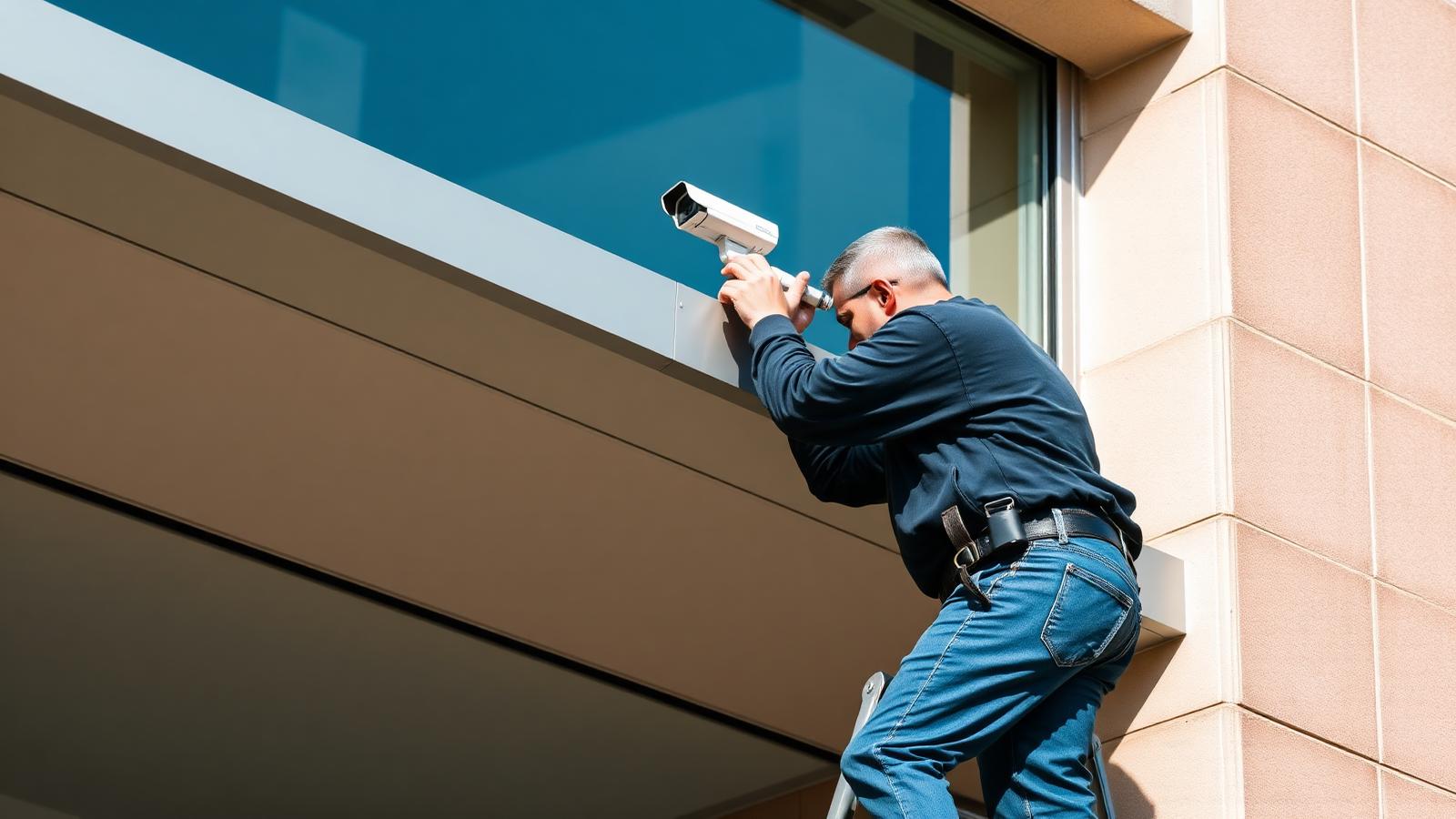
A well-designed active monitoring project typically includes:
- A site survey identifying entry points, sight lines, existing infrastructure, and problem hours
- Commercial-grade IP cameras with strong low-light performance (a hard requirement for Minnesota winters and early-dark evenings from October through March)
- AI analytics tuned per camera with time-of-day scheduling
- On-site horn speakers and strobes where required for effective talk-down
- A supported NVR or cloud VMS with adequate retention (30–90 days is typical for commercial and insurance requirements)
- Segmented network cabling and switching so cameras don't share a broadcast domain with business traffic — see our low voltage wiring service page
- Integration with access control and burglar alarm systems where present, so a verified video event can trigger door lockdowns or alarm arming
- A written monitoring response plan, tested, with your local Minneapolis or St. Paul precinct contact information on file
We handle every layer of this stack in-house for commercial customers across the Twin Cities and greater Minnesota service area, and we work with existing camera systems wherever the equipment is capable of it — you rarely need to rip and replace to add active monitoring.
Related Reading
Live video monitoring for Minneapolis businesses · 24/7 live security camera monitoring · Commercial security systems buyer's guide · 2026 Minnesota security camera installation costs · The hidden cost of outdated commercial technology