If your building still relies on analog copper phone lines for its main phones, fax machines, elevator emergency phones, fire alarm dialers, burglar alarm communicators, gate intercoms, or point-of-sale credit card lines — you are running on borrowed time. The nationwide sunset of Plain Old Telephone Service (POTS) is no longer a rumor, a proposal, or a future problem. It is happening now, on carrier-published timelines, with bills that have already climbed from roughly $35–$50 per line a few years ago to $200–$1,500+ per line, per month for the remaining POTS-in-a-can and grandfathered copper circuits.
This guide is written for the people who actually have to deal with it: building owners, facility managers, IT directors, franchise operators, and property managers across Minneapolis, St. Paul, and greater Minnesota. We'll cover what POTS replacement actually means, how VoIP, cellular POTS replacement devices, and eFax fit together, what to do about elevator phones and fire/burglar alarm dialers under current elevator and NFPA code, and how to survive a carrier cutover without your business phone number, your fax, or your elevator going dark.
What Is POTS and Why Is It Going Away?
POTS — Plain Old Telephone Service — is the traditional analog voice service delivered over a pair of copper wires from the phone company's central office to your building. It's the same technology that has powered business phones, fax machines, alarm panels, and elevator phones for the last century. It's also the technology every major U.S. carrier has been actively retiring since the FCC's 2019 order (FCC 19-72) eliminated the requirement to maintain legacy copper networks after proper notification.
AT&T, Lumen (formerly CenturyLink / Qwest), Verizon, Frontier, and Consolidated Communications have all filed to discontinue traditional TDM-based analog services and have been executing regional cutovers on staggered schedules. In Minnesota, most business customers are served by Lumen/CenturyLink or Comcast Business, both of which have been aggressively repricing legacy copper to push customers off the platform. The reality on invoices we see across the Twin Cities:
- Single-line business POTS invoices that ran $45–$80/month in 2018 are now landing at $150–$400/month per line in 2026.
- Elevator phone lines, fire alarm dialer lines, and burglar alarm dialer lines — which are almost always single-purpose POTS lines — are frequently the most expensive lines on the bill.
- Some rural exchanges and older downtown MDFs are past the "no new POTS" cutoff entirely. If your line ever fully fails, the carrier will not replace it with copper. Full stop.
- Repair SLAs on remaining copper have collapsed. Commercial phone line repair that used to be a next-business-day truck roll is now measured in weeks in many exchanges, because the outside plant technicians and the copper spare parts have both been retired.
Translation: even if your lines are working today, the combination of price, repair time, and outright discontinuation notices means every business needs a POTS replacement plan on paper before its carrier hands them a 90-day cutover notice. Those notices are not negotiable, and 90 days is not enough time to run new cabling, install new equipment, port numbers, and coordinate elevator and fire inspections in most commercial buildings.
What Is Actually on Your Copper Lines Right Now?
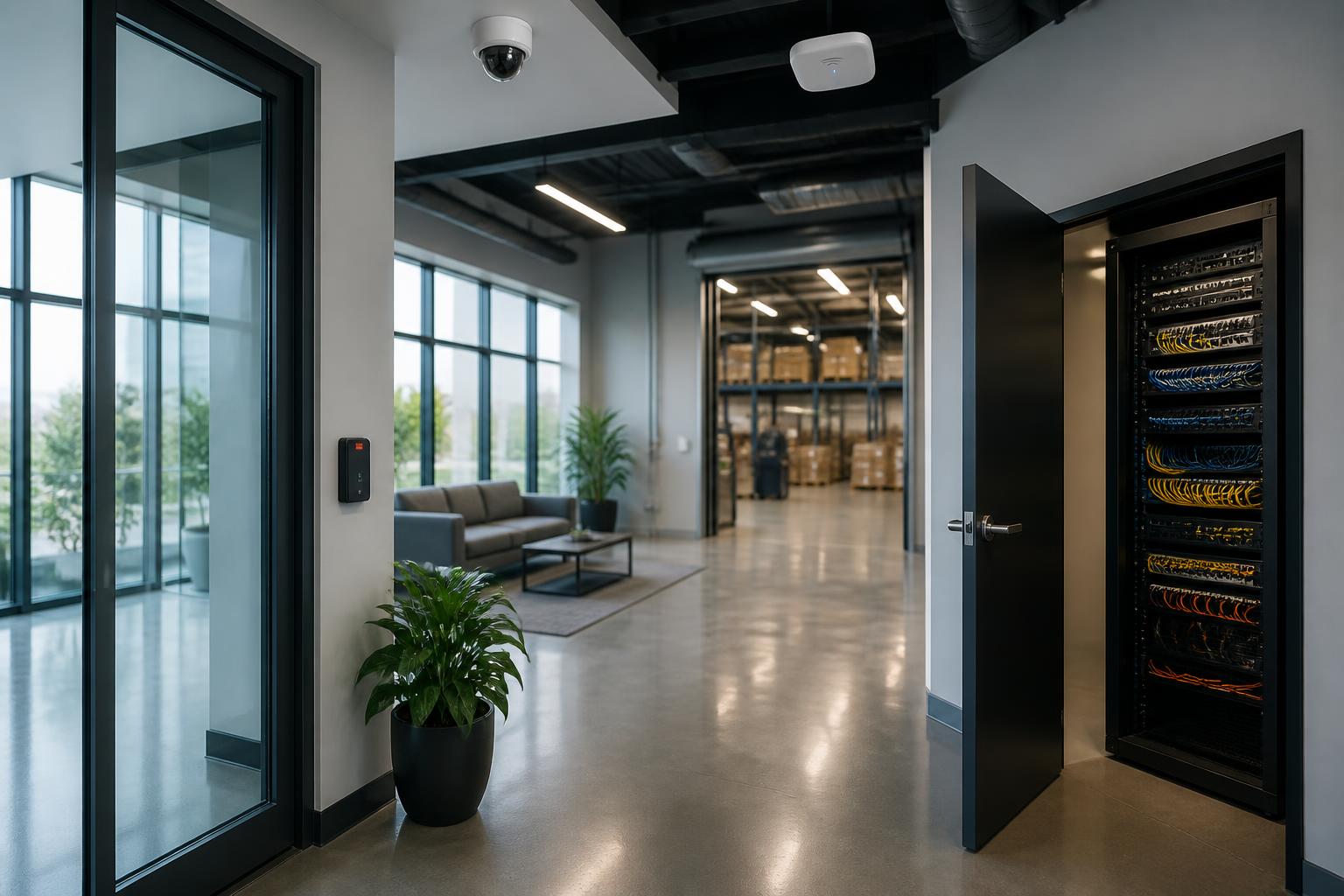
The first step in any POTS replacement project is a physical inventory of every analog line coming into the building and what it feeds. In our experience walking commercial properties across Minnesota, most owners are surprised to find they have 2–5x more analog lines than they thought, feeding devices nobody has thought about in a decade. A typical mid-sized commercial building inventory includes:
- Main business voice lines — often behind a legacy Nortel, Avaya, NEC, Panasonic, or Toshiba key system or PBX
- Fax lines — accounting, HR, medical, legal, escrow, or shipping departments
- Elevator emergency phones — one line per elevator car, required by ASME A17.1
- Fire alarm communicator (DACT) lines — historically two POTS lines per NFPA 72
- Burglar and hold-up alarm dialer lines — one or two per system
- Gate and callbox intercoms — parking gates, loading dock gates, after-hours entry callboxes
- Point-of-sale credit card dial-backup lines — still common in retail, restaurants, and franchise locations
- Modem lines for legacy BAS, HVAC, energy management, or utility meter callouts
- Ring-down and "hotline" phones — bank vault phones, security desk to lobby, tenant to management
- Overhead paging trunks feeding warehouse or retail loudspeaker systems
Each of these has a different replacement path, a different code requirement, and — critically — a different acceptable downtime window during cutover. You do not want to find out at 4:47 p.m. on cutover day that the ancient POTS line behind the receptionist's desk was also the ring-down to the security guard shack.
Option 1: Hosted VoIP for Business Voice and Fax
For general business voice — the phones on desks, in conference rooms, in break rooms, at the front counter — the modern replacement is hosted VoIP (also called cloud PBX or UCaaS): RingCentral, 8x8, Nextiva, Zoom Phone, Microsoft Teams Phone, Vonage Business, GoTo Connect, Dialpad, and similar. The phones themselves become IP handsets (Yealink, Poly, Cisco) or softphone apps on laptops and mobile devices, and the "phone system" lives in the provider's cloud instead of a beige box in your telecom closet.
Hosted VoIP replaces POTS one-for-one on the business voice side and typically cuts per-user cost by 40–70% versus legacy PRI or POTS-behind-a-PBX billing, while adding features that were expensive add-ons before: mobile twinning, SMS to your business number, auto-attendants, call recording, voicemail-to-email, integration with Microsoft 365, Google Workspace, HubSpot, Salesforce, and your CRM of choice. Number porting from your existing carrier is standard and usually takes 2–4 weeks — always start porting before you cancel anything.
The catch: VoIP is only as reliable as the network under it. That leads directly to the next section.
Business Internet Readiness: The Hidden Prerequisite
You cannot bolt hosted VoIP onto a marginal internet connection and a 12-year-old unmanaged switch and expect it to work. Voice traffic is unforgiving — 150 ms of latency, 30 ms of jitter, or 1% packet loss will make every call sound broken. Before any VoIP cutover, we verify:
- Sufficient upstream bandwidth — roughly 100 kbps per concurrent call with G.711, plus overhead for video, backups, and cloud apps
- A business-class circuit with a real SLA, not a residential-tier cable modem
- A managed switch with proper QoS tagging voice traffic (802.1p / DSCP EF)
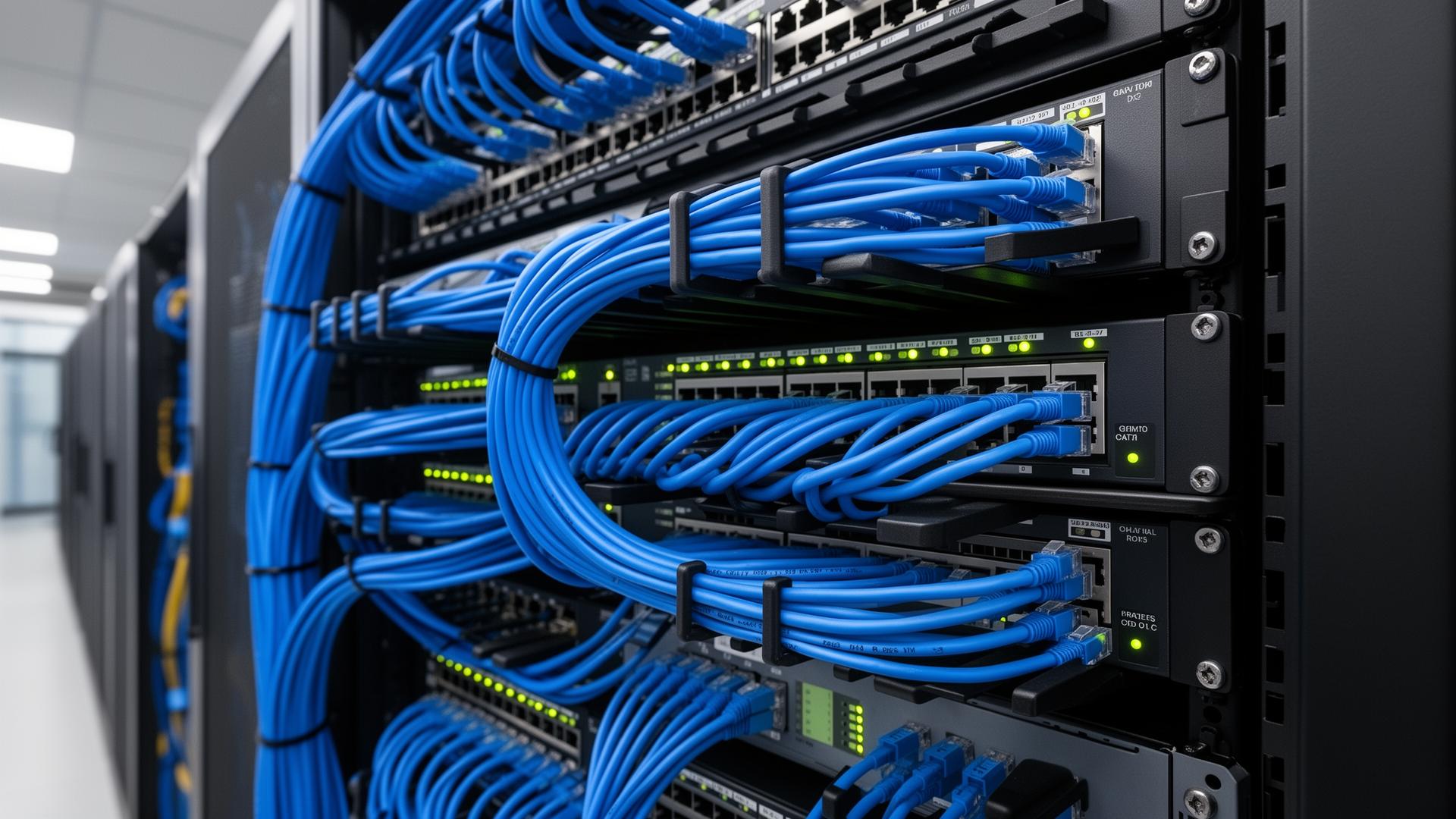
- PoE switches to power the desk phones — dedicated PoE budgets calculated for the full handset count
- A properly sized firewall with SIP ALG typically disabled, not enabled, on most modern providers
- A UPS on the switch, firewall, and modem/ONT — without it, a 30-second power blip drops every call in the building
- Ideally, a second WAN circuit (a cable/fiber primary with an LTE/5G failover) for automatic cutover during outages
This is exactly the work covered on our low voltage wiring services page, and it's why we treat network readiness as step zero of any POTS replacement project. See our related guide on why your business Wi-Fi and network might be holding your company back for the deeper dive.
Option 2: Cellular POTS Replacement Devices (the Right Answer for Elevators, Alarms, and Life Safety)
Not everything on your POTS bill wants to be VoIP. Elevator phones, fire alarm dialers, burglar alarm communicators, gate callboxes, and legacy analog devices don't care about SIP — they just need to reliably reach a dial tone and pass DTMF or voice. For those, the correct replacement is a cellular POTS replacement device — also sold as an "analog-to-cellular converter," "wireless POTS in a box," or "managed cellular voice service."
These are small appliances that provide RJ-11 analog jacks on the front, a 4G LTE or 5G radio on the back (usually with dual carrier failover — typically Verizon + AT&T or Verizon + T-Mobile), an internal battery for 24+ hours of standby, and a supervised managed-services connection back to a Network Operations Center. To the elevator phone, alarm panel, or fax machine plugged into the jack, it looks exactly like the copper line it replaced — the device dials out, gets a dial tone, and completes the call. The main platforms serving the Minnesota commercial market include NextGen Communications (POTS in a Box), Ooma AirDial, Granite EPIK, DataRemote CDS-9090, Verizon POTS Replacement, Sipulator, and WilsonPro / weBoost systems where signal boosting is required in a basement elevator machine room.
Pricing typically runs $50–$110 per line per month all-in (device, cellular service, 24/7 monitoring, dispatch, and battery/hardware warranty), versus $200–$800+ for the copper line it replaces. Payback in almost every commercial building is under 12 months, often under 6.
Elevator Emergency Phones — The Most Urgent Use Case
Under ASME A17.1 Safety Code for Elevators and Escalators, every passenger elevator must have a two-way emergency communication system that connects a trapped passenger to authorized personnel who can dispatch help — 24 hours a day, with automatic notification, and (per the 2019 edition and later) with video and text capability for hearing-impaired passengers on newer installs. Historically this was a single POTS line per car. When that copper line degrades or the carrier discontinues it, the elevator is out of compliance and cannot legally be operated. Elevator inspectors in Minnesota — under the state Department of Labor and Industry Elevator Safety unit — will red-tag a car with a non-functional emergency phone.
The approved replacement path is a cellular POTS replacement device sized and certified for elevator emergency phone use, mounted in the elevator machine room, with the elevator car's existing phone wiring cross-connected to the device's analog port. Most current elevator emergency phones (Kings III, RATH, Viking, Talk-A-Phone, Cornell) are compatible without replacement. Where the cab phone itself is aging or non-hearing-aid-compatible, the cellular cutover is a good moment to also bring it up to current A17.1 messaging and two-way video requirements.
Fire Alarm Dialers, Burglar Alarms, and Life Safety
Fire alarm digital alarm communicator transmitters (DACTs) historically required two separate POTS lines under NFPA 72. Current NFPA 72 (2022 edition) permits alternative communication paths — cellular, IP, or a combination — that meet supervision and performance requirements. In practice, the accepted replacement is a cellular fire alarm communicator such as the AES IntelliNet, Bosch B450/B440, DMP CellComSL/263C, Honeywell/Fire-Lite IPGSM, Napco StarLink Fire, or Telguard TG-7FS, listed to UL 864 and connected to a UL-listed central station. These typically cost less than one month of dual-POTS billing to install and eliminate the copper lines entirely.
Burglar alarm dialers follow the same pattern — a UL 1610 or UL 1023 listed cellular or dual-path IP/cellular communicator replaces the POTS dialer output, connects to your existing panel (DMP, Bosch, Honeywell Vista, DSC, Napco), and reports to your monitoring center over the cellular network. See our burglar alarm systems service page for how we handle these conversions during POTS retirement projects.
Option 3: eFax and Cloud Fax for the Fax Lines Nobody Will Give Up
Fax is not dead in medical, legal, financial, escrow, freight, and municipal environments. HIPAA, the DEA (for EPCS and controlled substance workflows), and many payer/provider workflows still assume fax as a valid delivery channel. What is dead is fax over a T.38-unfriendly VoIP trunk on a copper line that no longer exists.
The clean replacement is eFax / cloud fax: your fax number ports to a cloud fax provider (SRFax, Nextiva vFAX, RingCentral Fax, Concord, eFax Corporate, Documo, Sfax for HIPAA-covered workflows) and inbound faxes arrive as PDFs in email, a secure web portal, or directly into your EHR / document management system. Outbound faxes are sent from email, a web dashboard, a Microsoft 365 add-in, or a virtual print driver. HIPAA-eligible plans include Business Associate Agreements and audit logging.
For environments that must keep a physical fax machine on the counter — some medical practices, county recorder offices, some title companies — a fax ATA (analog telephone adapter) with a T.38-compliant SIP trunk, or a dedicated cellular POTS replacement device on that line, keeps the machine working while retiring the copper.
Anatomy of a Clean Carrier Cutover
A cutover fails when it's treated as a phone project instead of a building project. A cutover that goes smoothly follows a predictable sequence:
- Full line inventory and DID list pulled from every current carrier — CenturyLink/Lumen, AT&T, Comcast, Consolidated, US Signal, Charter Spectrum Business, etc. — matched to what each line physically feeds inside the building.
- Design decisions per line: hosted VoIP, SIP trunk to on-prem PBX, cellular POTS replacement device, cloud fax, or IP/cellular communicator. Every line gets an assigned target.
- Network readiness: circuit upgrades, managed PoE switching, firewall/QoS, UPS, and where required, LTE/5G WAN failover.
- Hardware installed and tested in parallel — new IP phones on desks, cellular POTS boxes in the telecom room and elevator machine room, alarm communicators on the fire and burglar panels — while the old lines are still live.
- Number porting orders submitted (2–4 weeks lead time typical, sometimes longer for main billing telephone numbers).
- Coordinated cutover day: forwarding on the old lines, port completion, DID mapping verified, fax test, alarm test with the central station (fire and burglar), elevator phone test with the monitoring center, POS test, gate/callbox test.
- 30-day parallel or grace period where practical, followed by a formal disconnect of the copper — never before the new path is verified in production.
- Updated posted phone numbers: elevator car placards, alarm panel service labels, fire panel labeling, gate signage, business cards, website, Google Business Profile, and directory listings.
This is the same disciplined project management we bring to every commercial low voltage build. If you want the broader context on how a specialized contractor handles this class of work, see what a commercial low voltage contractor actually does.
What This Looks Like on Your Bill
A representative Minnesota mid-market commercial building — one elevator, monitored fire and burglar alarm, two fax lines, a gate callbox, and 25 users on a legacy key system — will typically go from $1,800–$3,200/month in copper POTS and PRI billing to $700–$1,300/month all-in after full POTS replacement, including hosted VoIP seats, cellular POTS devices, alarm communicators, and cloud fax. The payback on the equipment and installation is usually 8–14 months. After that, every month is savings — plus you never see another commercial phone line repair invoice from a technician you had to wait three weeks for.
Common Mistakes to Avoid
- Waiting for a discontinuation letter. By the time the carrier gives you 90 days, you're already behind on porting, elevator inspections, and fire panel recertification.
- Cutting over voice without addressing the elevator and alarms. These are the lines that cause code violations and life-safety exposure, not the ones on the reception desk.
- Assuming a residential-grade cable modem is enough for hosted VoIP. It isn't. Business-class circuits, managed QoS, PoE, and UPS are not optional.
- Trying to run fax over a non-T.38 SIP trunk without a plan. Faxes will fail intermittently, silently, and always on the most important documents.
- Cancelling the copper before the port completes. This is how businesses lose the phone number they've had for 30 years.
- Forgetting the "small" lines. Gate callboxes, POS dial-backup lines, and ring-down phones are almost always overlooked in the inventory and then discovered on cutover day.
- Skipping the second cellular carrier. Elevator and life-safety cellular boxes should be dual-carrier (Verizon + AT&T or Verizon + T-Mobile). Single-carrier saves a few dollars and fails at the worst moment.
Related Reading
Why your business Wi-Fi and network might be holding your company back · What a commercial low voltage contractor actually does · The hidden cost of outdated commercial technology · Network cabling best practices in Minnesota · Fiber infrastructure for commercial buildings