Builders spend months planning schedules, sequencing trades, and protecting margins — and then leave millions of dollars of exposed material sitting in the open overnight. An active construction site is one of the few commercial environments with no door to lock, no alarm panel, no fence that actually stops anyone, and no one present for most of the week. It's also one of the few where the most valuable assets — copper wire, tools, equipment, appliances, lumber, fuel — are exactly the items that walk away easiest.
The result is familiar to nearly every general contractor and commercial developer in Minnesota: a site that gets hit not once but repeatedly, with losses that show up as replacement material, insurance claims, schedule slips, and re-work. This article walks through how construction site security cameras and the layers around them are actually deployed on job sites — what gets covered, how systems get power and connectivity on a site that doesn't have either yet, how placement changes by project phase, and where live monitoring fits.
Why Job Sites Get Hit Again and Again
Theft on a construction site is rarely opportunistic the way a smash-and-grab is. Sites get cased. Thieves know the layout, know the delivery schedule, and know what's stored where — and once a site has been hit successfully, it usually gets hit again until something changes.
What actually disappears from Minnesota job sites:
- Copper wire — the single most targeted material. Spools sit in staging areas or partially installed in walls during the electrical phase, and it cashes in anywhere.
- Tools and small equipment — from gang boxes, job trailers, and unlocked site offices. Fast to grab, hard to trace.
- Large equipment — skid steers, mini excavators, compressors, and trailers, often towed away or driven off with their own keys left in the ignition.
- Materials — lumber, sheet goods, appliances, fixtures, and HVAC units staged for install, especially during the finishing phase.
- Fuel — from tanks and equipment, increasingly common.
The direct replacement cost is only part of the loss. A stolen heat pump or a spool of copper pulled out of finished walls stops work, forces re-inspection, and pushes completion dates. On most projects, the schedule impact costs more than the item that was taken — which is why prevention is worth more than documentation.
Cameras Are One Layer, Not the Whole Answer
A camera bolted to a pole records a theft; it rarely prevents one. Effective job site security stacks several layers, and the camera layer works best when the others make an intruder spend time in the open:
- Perimeter fencing, kept closed and repaired — a breached fence panel left open for a week is an invitation.
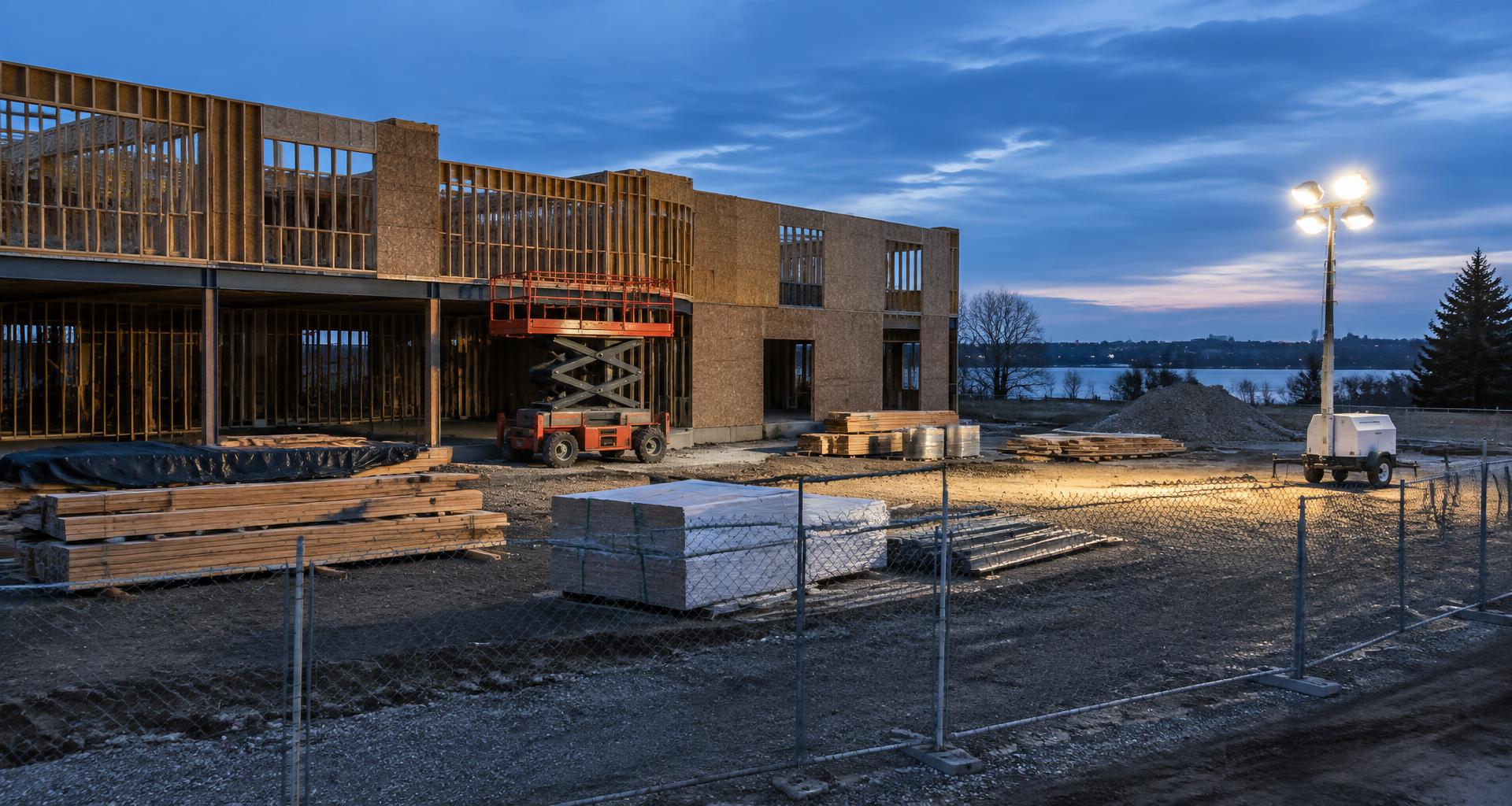
- Lighting, especially around staging areas, trailers, and equipment parking. Darkness helps thieves and ruins footage at the same time.
- Lock management on gang boxes, trailers, site offices, and equipment — with keys actually collected at layoff, not duplicated across the crew.
- Material staging discipline — high-value material delivered close to install date and stored inside or lit whenever possible, rather than dropped at the gate weeks early.
- Cameras and signage, which raise the risk of being identified and recorded.
- Live monitoring, which is the layer that actually intervenes — covered below.
None of these layers has to be elaborate. Consistency matters more: the sites that stop getting hit are the ones where nothing about the site says "easy."
Camera Options by Site Type
There's no single job site camera setup, because no two sites have the same power, duration, or layout. Four configurations cover nearly every situation:
Fixed Pole-Mounted Cameras
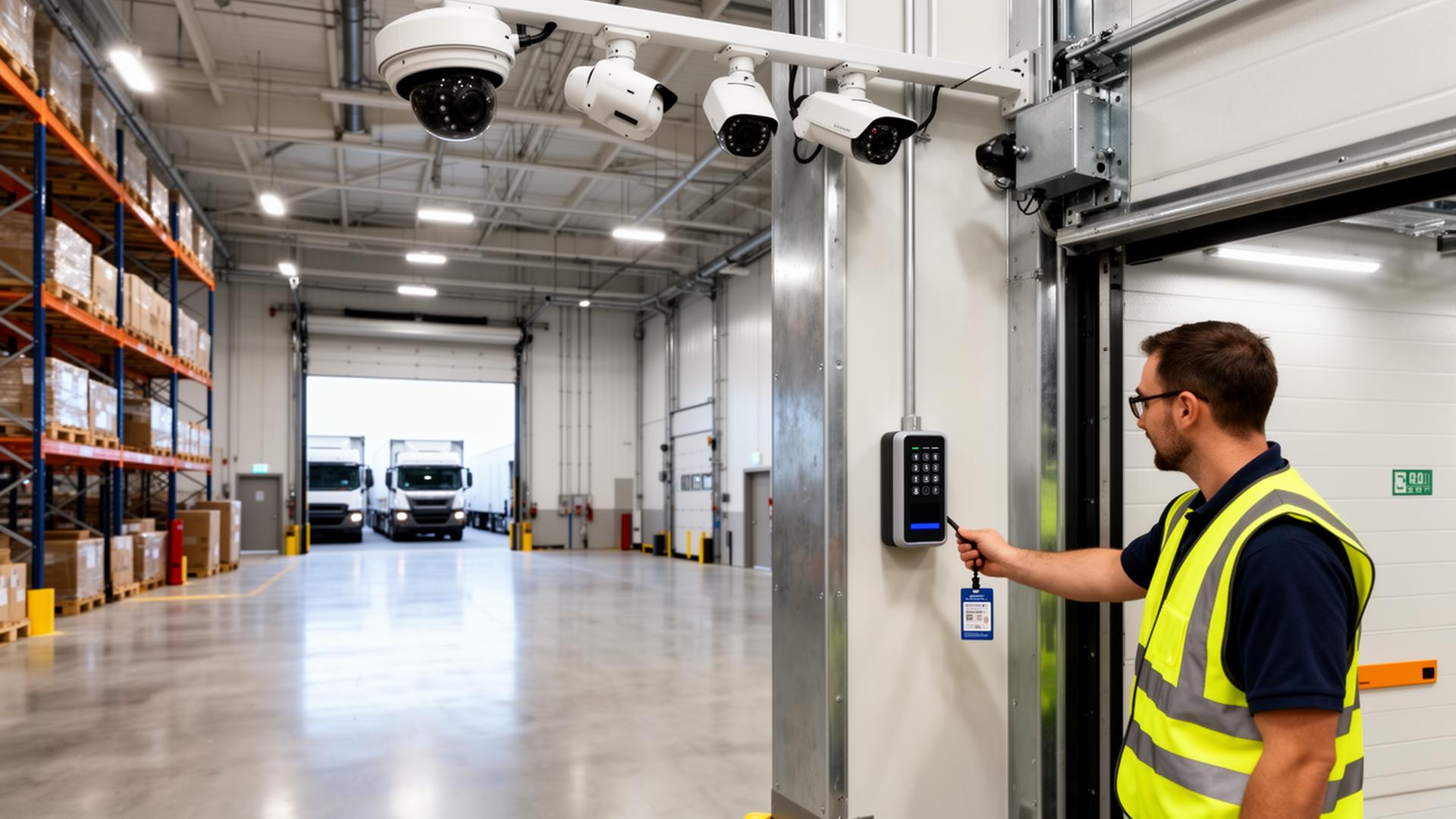
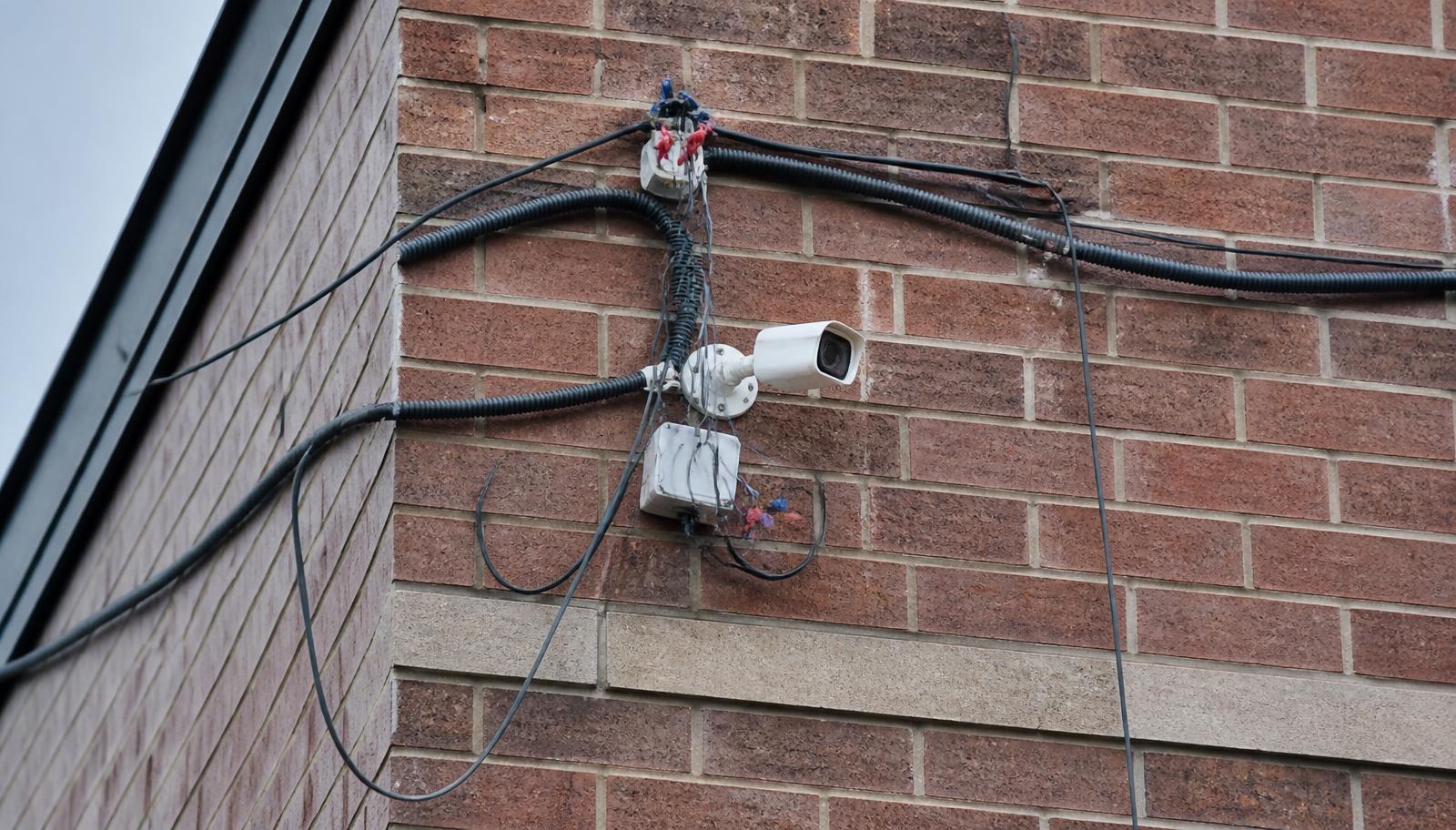
The workhorse for sites with power. Cameras on wood poles, existing structures, or the building itself, cabled back to a recorder in the site office or a locked enclosure. Best for longer builds where the layout is reasonably stable and temporary power is available.
Mobile Solar Surveillance Trailers
The answer when the site has no power. A self-contained trailer with cameras, solar panels and batteries, and cellular backhaul — towed in, raised, and running the same day. The right fit for early-phase sites, remote lots, and sites that move as the project does.
Hybrid, Phased Deployments
Common on multi-month projects. A trailer covers the site while there's no power, then fixed cameras take over as temporary power and the building shell arrive, and the trailer moves to the next phase or job. Coverage follows the value.
Standalone Battery/Cellular Cameras
For targeted gaps. A spot that needs one more view — a storage container, a gate, a fuel tank — without running cable. Useful as a supplement; not a substitute for a designed system on an active site.
On a long commercial build, we usually see the sequence run the other direction too: the trailer that protected the site during excavation gets redeployed to the parking lot or a second pad while the fixed system covers the finished structure. Equipment should move with the risk.
Power and Connectivity: The Part That Makes or Breaks a Job Site System
Office buildings have power and internet. Construction sites have neither for the first weeks or months, and this — not camera selection — is where job site security systems succeed or fail.
- No utility power yet: solar-charged battery systems carry the load. Camera selection, recording resolution, and analytics all have to be sized to the battery budget, not just the view.
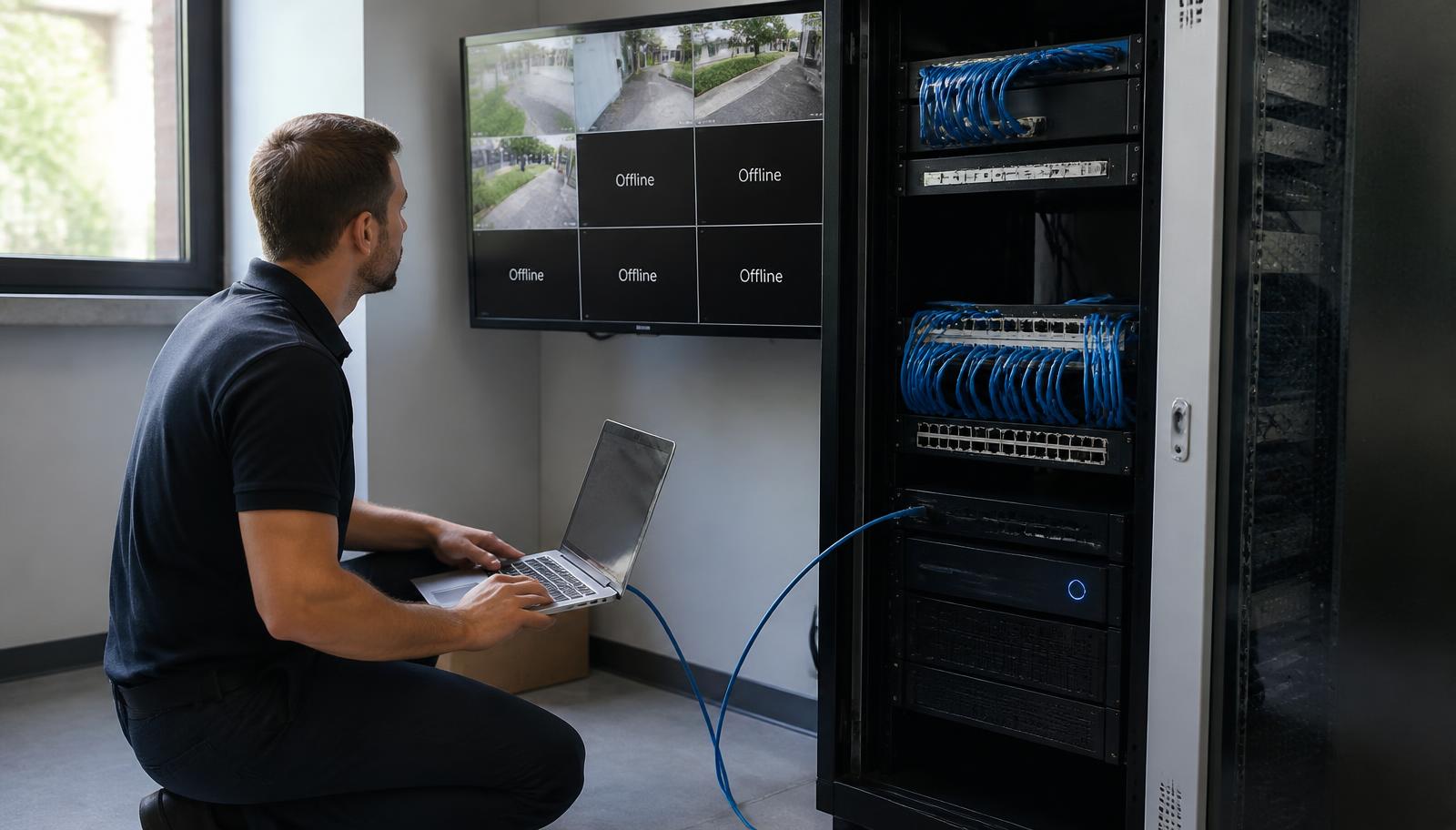
- Temporary power only: a site powered by a temporary panel or generator works fine, but the system has to tolerate outages — battery backup on the recorder and cameras, so a generator hiccup doesn't create a recording gap.
- No internet: cellular backhaul is standard on job sites. Upload bandwidth shapes how much video can be streamed off site for live monitoring or remote viewing, so it's planned deliberately rather than assumed.
- Minnesota winters: cold drains batteries, snow buries panels and blocks views, and short daylight hours cut solar recharge. Winter sites need equipment rated for the cold, panels kept clear, and camera positions re-checked after snow events.
- When permanent power arrives: the system should be planned so the transition from temporary to permanent infrastructure doesn't leave a coverage gap. This is where structured cabling and low voltage infrastructure planned early pays off.
This is also why a consumer-grade camera kit from a big box store rarely survives a real job site: it assumes power, Wi-Fi, and a stable environment that a construction site simply doesn't have.
Placement by Project Phase
A job site's highest-value assets move as the project progresses, and camera coverage should move with them.
- Excavation and foundation: the risks are equipment and fuel. Cover the equipment staging area, the site entrance, and the fuel storage. A trailer on high ground usually sees the whole site from here.
- Structural and framing: material deliveries start stacking up. Cover the delivery route and drop zone, the staging area, and the building approaches. This is also when copper and fixtures start arriving and need covered, lit storage.
- Electrical and finishing: copper in the walls, appliances, fixtures, and finished surfaces become the targets. Coverage moves inside — corridors, unit entries, mechanical rooms — plus the exterior doors that are now installed but not yet secured.
- Closeout and turnover: the risk shifts to the finished building: landscaping, fixtures, elevators, and any remaining equipment. Systems can transition to a permanent commercial camera system at handover — which is much easier if the infrastructure was planned for it.
The entrances deserve special mention at every phase. Nearly everything that leaves a site without permission goes out through the gate or a drive approach, and a camera that captures vehicles entering and leaving is consistently the most valuable one on the site.
Live Monitoring: The Layer That Acts Instead of Records
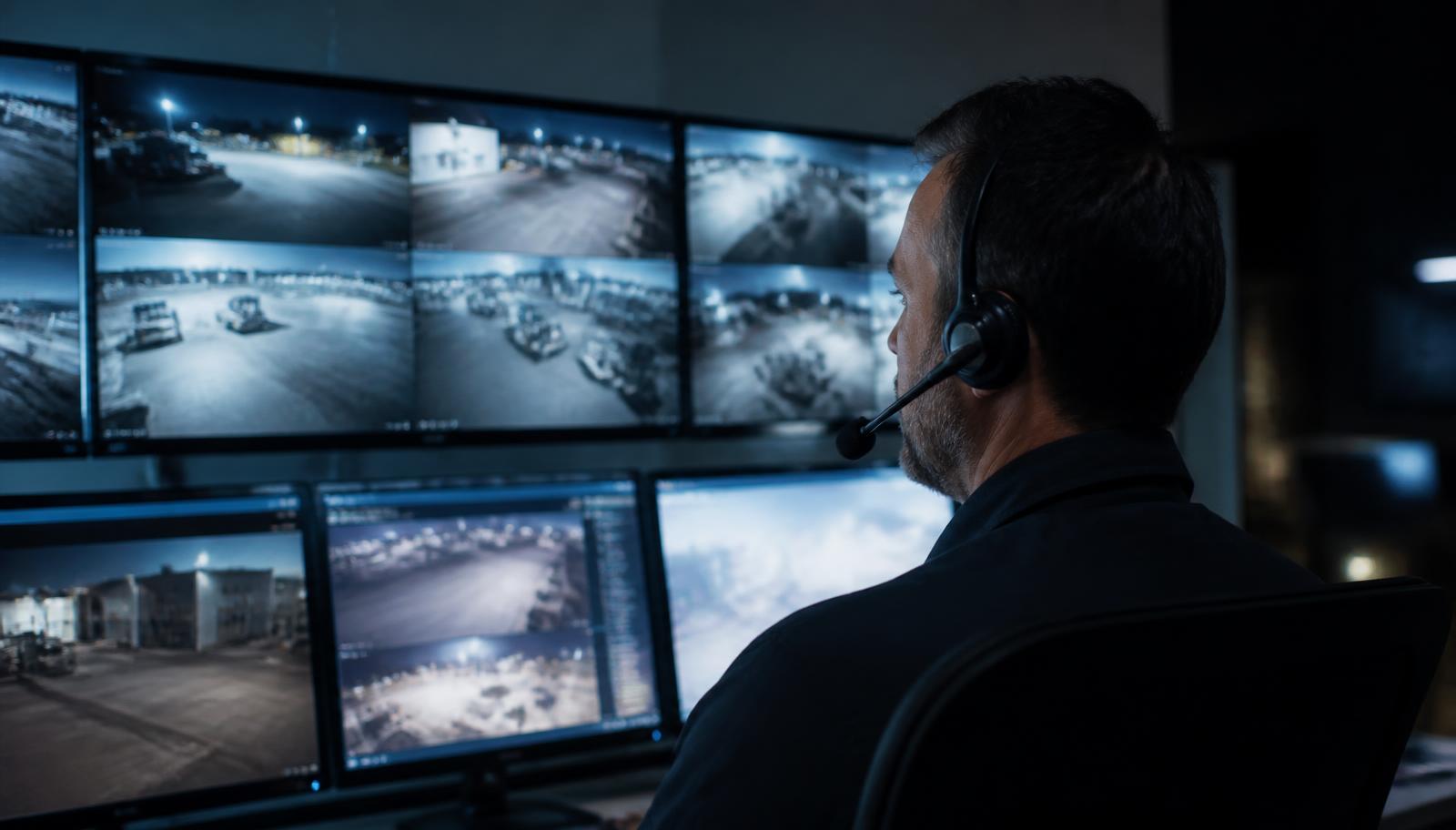
Here's the honest limitation of any camera on an unoccupied site: nobody is watching it at 2 a.m. Recorded footage identifies who stole the copper after it's gone. It doesn't stop the truck.
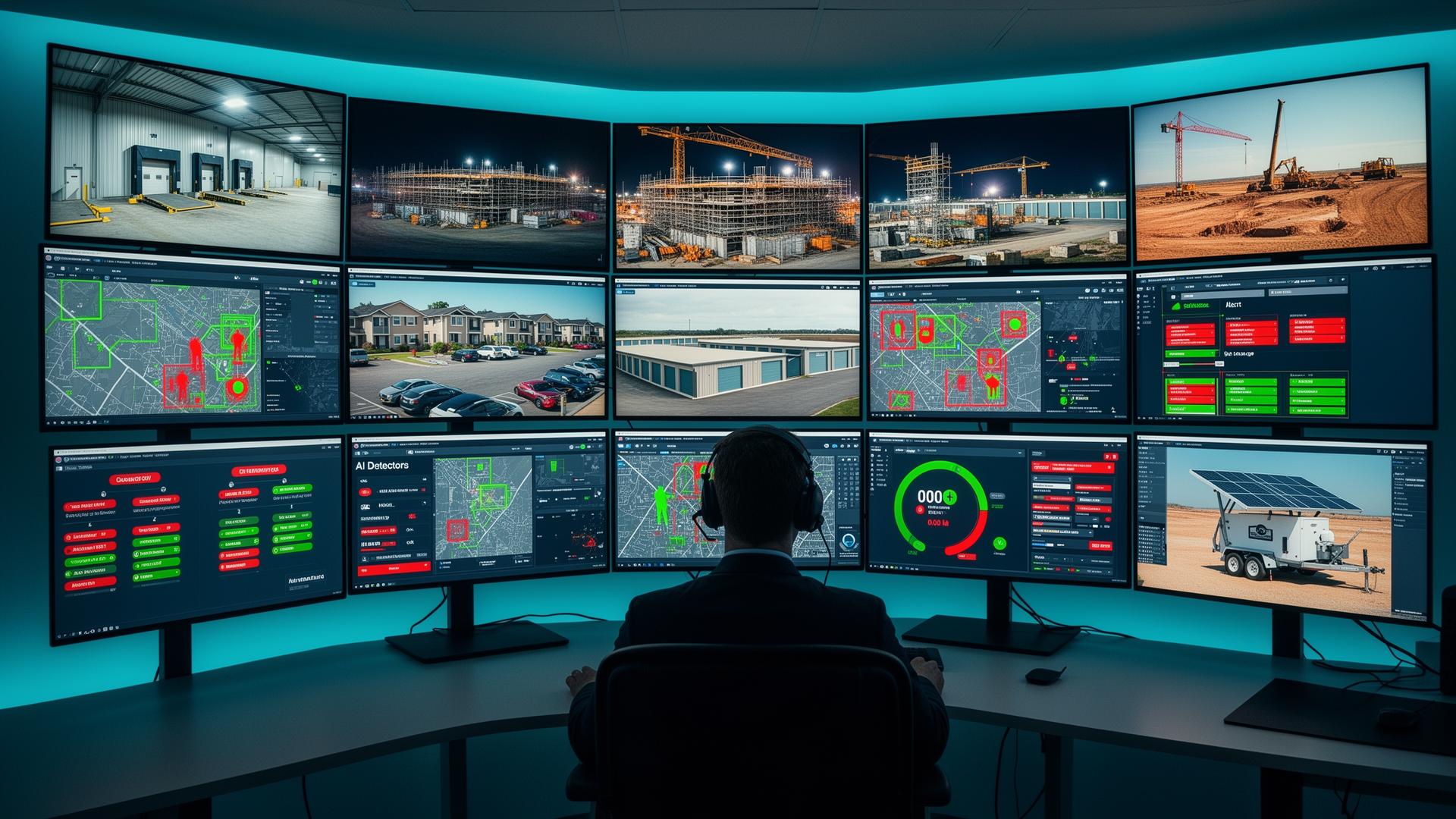
Live video monitoring closes that gap. AI analytics on the cameras flag a person or vehicle entering a defined area during defined hours. A trained operator views the live video, verifies whether it's an actual person rather than a deer or wind-blown debris, and can speak through on-site speakers with a voice-down — which ends a large share of incidents before anything leaves the site. When someone doesn't leave, the operator follows the escalation protocol the site owner defines: calling the owner or site superintendent, dispatching police with a live description, or both.
For job sites specifically, monitoring is usually scoped to overnight and weekend hours, with the detection zones drawn around equipment, material staging, and the building — and adjusted as the site changes. False alarms from wind, wildlife, and passing traffic are the main engineering challenge, and that's a placement and analytics-tuning task, not a reason to skip the layer.
Where monitoring makes the most sense: sites with repeated hits, high-value copper or equipment phases, remote sites far from any patrol route, and projects where the schedule cost of a loss outweighs the monthly cost of watching. Our breakdown of virtual security guards vs. on-site guards covers how remote monitoring compares to a physical guard presence, and the 24/7 live monitoring guide explains the event workflow in detail.
Which Setup Fits Your Site?
Most sites fall into one of three situations, and each points to a different starting point:
Site Without Power
Start with a mobile solar surveillance trailer. It brings its own power, cameras, and cellular connection, covers the whole site from a raised vantage point, and can add live voice-down monitoring from day one. Move it as the site grows, or add fixed cameras when power arrives.
Site With Temporary Power
Start with fixed cameras on the risk. Pole-mounted or structure-mounted cameras cabled back to a recorder in the site office, sized to run through power interruptions on battery backup. Add cellular or a trailer only if there's a dead zone or the site layout is about to change.
Long-Duration Build
Plan it in phases like the project itself. A trailer during excavation, fixed cameras during structure and finishing, inside coverage as copper and fixtures arrive, and a transition to a permanent commercial system at turnover — with conduit and camera positions roughed in early so nothing gets torn out.
What to Document Before Requesting a Job Site Security Estimate
A site walkthrough goes faster and the quote comes back more accurate when the superintendent or owner brings a few basics. None of it requires technical knowledge:
- Site plan or aerial screenshot, even a rough one — entrances, staging areas, trailers, equipment parking, and the site office.
- Project duration and current phase, since a three-week sitework job and an eighteen-month build get different answers.
- Power status: none, temporary, or permanent — and when that changes.
- What's on site that keeps getting hit, or what keeps you up at night: copper, tools, equipment, fuel, or vandalism.
- Fencing and lighting situation, and whether anything is planned to change.
- Insurance or owner requirements — some project owners or carriers specify surveillance or monitoring on the project.
- Who responds at 2 a.m. — the name and number monitoring would escalate to.
Request a free job site walkthrough.
- ✅ We walk the site — entrances, staging, equipment areas, and power situation
- ✅ A straight answer on what your site actually needs, and what it doesn't
- ✅ A written recommendation and estimate, sized to the project timeline
- ✅ No cost, no obligation
Magnuson Low Voltage Wiring designs and installs construction site camera systems, mobile surveillance, and live video monitoring for builders, general contractors, and commercial developers across the Twin Cities metro, the north metro, the I-35 corridor, East Central Minnesota, and Western Wisconsin. See our service areas or request a free estimate. For the permanent systems that follow turnover, start with commercial security camera installation.