Most business networks don't fail all at once. They get messier one quick fix at a time — a new switch here, a patch cord there, a power strip zip-tied to the wall — until nobody wants to touch the network closet because they're afraid of what will go down.
This case study walks through a real commercial network rack cleanup we completed for a Minnesota facility. The customer stays anonymous, but the photos and the work are real.
The Starting Point: Equipment Mounted Straight to Plywood
When we arrived, the network area was a plywood backboard with active equipment fastened directly to it. Blue and white data cabling hung loose, power cords and patch cords ran in every direction, and there was no rack, no cabinet, and no clear path for any of it.
It worked — until it didn't. Setups like this create the same problems in almost every building we walk into:
- Troubleshooting takes too long. When cables aren't dressed or organized, tracing one connection means pulling on the whole bundle.
- Accidental outages. A bumped cord or a loose patch can drop phones, cameras, or the internet for the whole office.
- No physical security. Equipment on an open wall can be unplugged, moved, or tampered with by anyone who walks by.
- Future work costs more. Every technician who comes after has to untangle the wall before they can do the job they were hired for.
What We Did
The goal wasn't to rip everything out. It was to get the active equipment off the plywood and into a proper home, then leave the cabling organized enough that the next service call is quick and predictable.
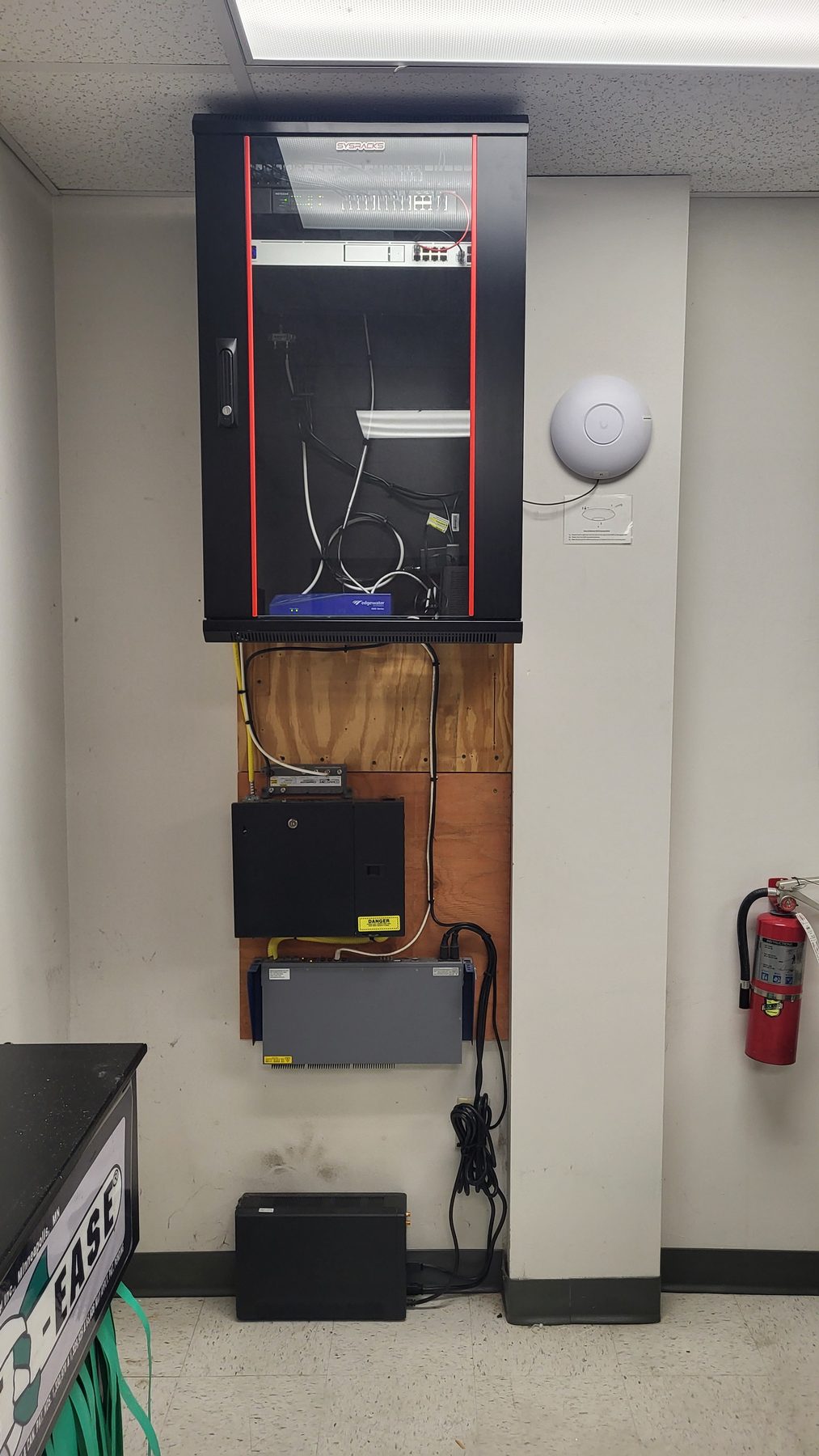
- Installed a lockable wall-mount rack above the existing backboard, so the active network gear sits in a closed, secured cabinet instead of on an open wall.
- Moved the active equipment into the rack, including the switch and rack-mounted gear.
- Re-dressed the cabling so it routes neatly to the sides and behind the cabinet instead of hanging across the wall.
- Kept the backboard and battery backup accessible along the wall for service.
You can see the full before-and-after photo set on our projects page under "Commercial Network Rack Transformation."
The Result
The finished wall is a closed network cabinet with the equipment organized and accessible. Opening the door shows the switch and rack gear with cabling dressed to the sides. The practical difference for the business:
- Service work no longer means untangling the whole wall.
- Network equipment is behind a locked door.
- Cables are far less likely to get bumped or pulled loose.
- Adding equipment later has a defined place to go.
Signs Your Network Closet Needs the Same Treatment
- Equipment is sitting on a shelf, the floor, or screwed directly to a wall.
- Nobody is sure which cable goes to which office, camera, or phone.
- Patch cords are far longer than they need to be and hang in loops.
- Power strips are daisy-chained or zip-tied in place.
- You moved into a building and inherited someone else's network wiring.
- Your IT person or vendor dreads going into the closet.
If several of those sound familiar, a cleanup is usually a smaller project than a full rewire — and it makes every future change easier. Inherited setups are especially common; we documented a similar move-in situation in our Facility Move-In Network Rack Cleanup & Switch Upgrade project.
Cleanup, Upgrade, or Full Structured Cabling Project?
Not every messy closet needs the same fix:
- Cleanup: the cabling itself is in decent shape, but equipment and patching need to be organized and secured — like this project.
- Upgrade: switches or other network hardware are aging out and get replaced while the rack is being organized.
- New cabling: drops are failing, undocumented, or don't reach where the business now needs them. That's a full commercial structured cabling and network wiring project.
The right answer depends on what's behind the wall, which is why we start with a walkthrough rather than a quote over the phone. For more on what a professional install should include, see our guide to hiring a commercial network cabling contractor in Minnesota.
Where We Work
We handle network rack cleanups, switch upgrades, and structured cabling for businesses across Minneapolis, St. Paul, the north metro, the I-35 corridor, East Central Minnesota, and western Wisconsin. See our full service areas.