Today's educational facilities face a very different set of expectations than they did even ten years ago. Public schools, private schools, charter schools, faith-based schools, colleges, technical colleges, and child care centers are all being asked to balance more than ever before — student safety, staff safety, visitor management, campus accessibility, emergency preparedness, and modern technology integration — without losing the welcoming environment that families and students expect.
Modern school security is no longer about a single camera at the front door or a locked entrance. It is about building multiple layers of protection that work together, supported by reliable infrastructure and a long-term plan. This article walks through the layers we see successful Minnesota schools investing in, and how those layers fit together into a thoughtful, phased security strategy.
Layer 1 — Visitor Management
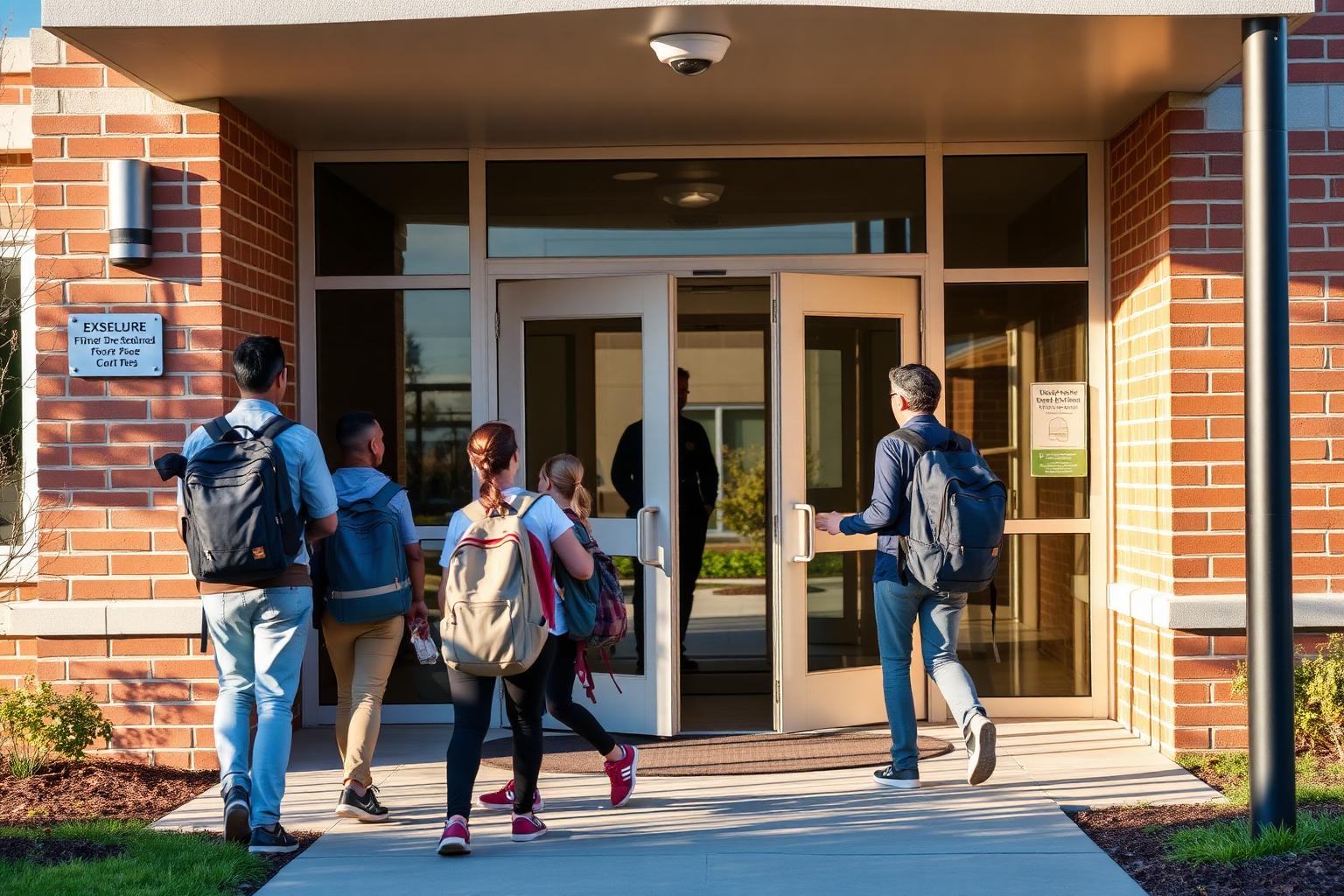
Knowing exactly who is entering a building remains one of the most important elements of any campus security plan. A well-designed visitor management layer typically includes:
- Secure vestibules at the main entrance
- Structured visitor check-in procedures
- Temporary printed or digital visitor credentials
- Defined delivery and dock procedures
- Contractor sign-in and escort policies
- Volunteer and parent-helper management
Visitor management is as much about process as it is about technology. The technology — readers, intercoms, cameras, and door hardware — exists to support staff in carrying out clear, consistent procedures during arrival, dismissal, deliveries, and after-hours events.
Layer 2 — Modern Access Control
Traditional brass keys create real challenges for schools: lost keys, unauthorized duplication, expensive rekeying after staff turnover, and very limited visibility into who opened what door and when. Modern access control systems from commercial manufacturers such as Schlage and Allegion address those issues with:
- Card readers and key fobs
- Mobile credentials on staff smartphones
- Scheduled door locking and unlocking
- Remote unlock for deliveries and after-hours access
- Detailed audit trails for every door
- Integration with emergency lockdown procedures
Replacing physical keys with managed credentials improves accountability, simplifies staff turnover, and gives administrators flexibility they simply cannot get from a key cabinet.
Layer 3 — Commercial Surveillance
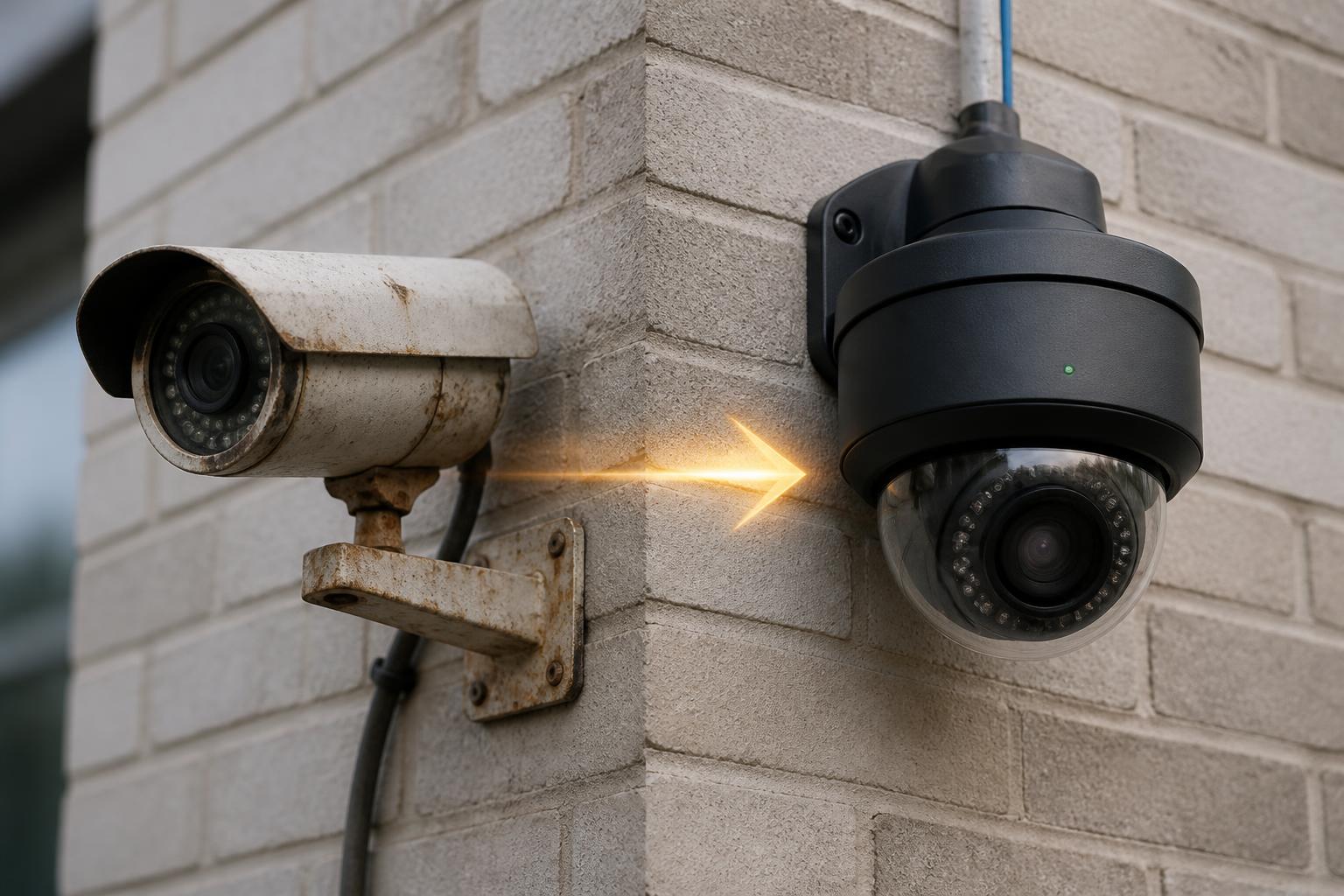
Commercial security camera systems are most effective when they are planned, not simply added. A thoughtful camera design considers coverage at:
- Main entrances and secure vestibules
- Parking lots and staff entry points
- Bus loading and drop-off zones
- Athletic facilities, fields, and gyms
- Hallways and stairwells
- Cafeterias and common areas
- Administrative offices and reception
- Exterior perimeters and service doors
Commercial manufacturers such as Hanwha Vision and Axis Communications offer camera lines built specifically for the resolution, low-light performance, and durability that educational facilities need. The goal is appropriate coverage at the openings that matter most — not simply installing more cameras.
Layer 4 — AI Video Analytics
Modern AI-assisted analytics can meaningfully improve situational awareness for school staff and administrators. Depending on the platform, capabilities may include:
- Person and vehicle detection
- Loitering alerts in sensitive areas
- Perimeter intrusion notifications
- Smoke or fire detection (on supported devices)
- Weapon detection (on certain AI platforms)
- Intelligent video search to quickly review events
Platforms such as Coram AI are one example of how AI can analyze existing camera feeds to surface faster notifications for the people responsible for responding. AI is best thought of as a tool that assists trained staff and improves awareness — it is one layer within a comprehensive strategy, not a guarantee that every possible event will be detected or prevented.
Layer 5 — Emergency Communication & Response
Technology should support — not replace — the emergency procedures a district, school, or facility has already established. A strong communication layer typically includes:
- Lockdown integration with access control
- Mass notification to staff and families
- Video verification of reported events
- Clear, role-based communication between staff
- Coordinated information sharing with emergency responders
The most effective deployments tie cameras, access control, intercoms, and notification systems back to the procedures staff already practice during drills.
Layer 6 — Network Infrastructure
None of the layers above perform reliably without a strong network foundation. Modern school security depends on well-designed commercial network cabling and infrastructure, including:
- Fiber optic backbone between buildings and IDFs
- Cat6 / Cat6A horizontal cabling
- Managed PoE switches sized for cameras and access points
- Commercial Wi-Fi designed for density and coverage
- UPS battery backup for critical equipment
- VLAN segmentation to isolate security traffic
- Reliable cloud connectivity for managed platforms
When the network is engineered correctly, cameras stream, doors respond, and notifications go out exactly when they should. When it is not, every other layer suffers.
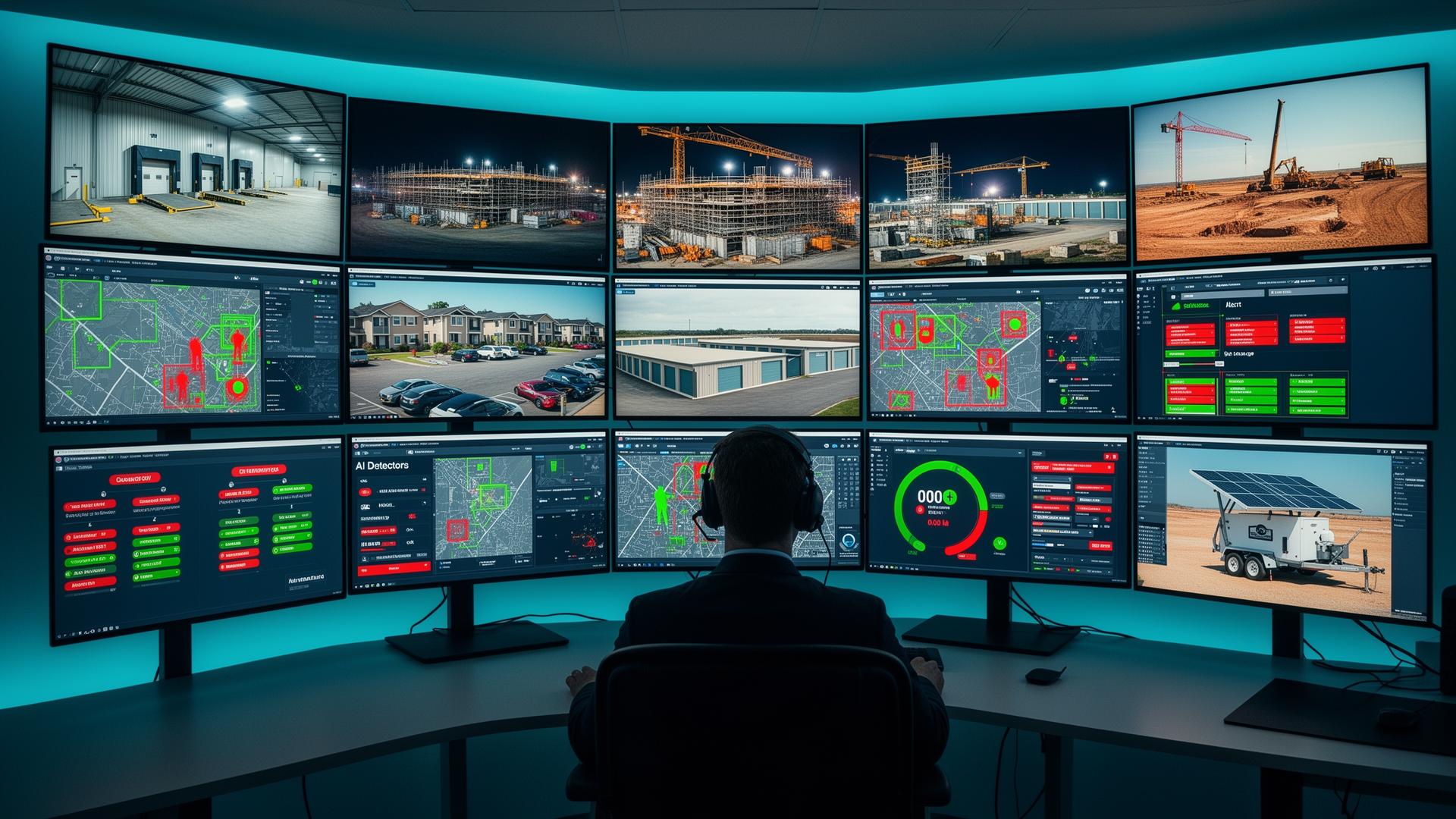
Layer 7 — 24/7 Video Monitoring
Surveillance systems do far more than record events for later review. Many schools, colleges, and child care centers are now evaluating professionally monitored video services for situations such as:
- After-hours monitoring of buildings and entrances
- Summer break and extended closures
- Weekends and holiday periods
- Athletic facilities and outdoor venues
- Portable classrooms and modular buildings
- Maintenance yards and bus storage
- Active construction or renovation projects
- Perimeter protection of large campuses
Professionally monitored systems can verify activity in real time on permanent security cameras and initiate established response procedures when appropriate — adding a human layer on top of the technology.
Security Planning Is a Journey
Very few schools replace every security system at once, and they shouldn't have to. A phased, multi-year plan respects existing budgets while moving the campus forward. A typical roadmap might look like:
- Year 1 — Camera upgrades and coverage improvements
- Year 2 — Access control modernization on key openings
- Year 3 — Network, fiber, and Wi-Fi improvements
- Year 4 — AI analytics on existing camera feeds
- Year 5 — Monitoring services and software upgrades
Long-term planning, rather than one-time projects, is what produces a security posture that actually keeps up with how schools change.
Serving Minnesota Schools and Educational Facilities
Magnuson Low Voltage Wiring supports educational facilities of every size across Minnesota, including public school districts, private schools, charter schools, Christian schools, Catholic schools, Lutheran schools, church-affiliated schools, colleges, technical colleges, child care centers, and early learning centers. We help administrators and facilities directors plan layered, phased security strategies that fit their buildings, budgets, and long-term goals — serving Minneapolis, St. Paul & East Central Minnesota.